
Can Police Chase You for Tinted Windows? Stops vs. Pursuits
A tint stop and a police pursuit follow different rules. Learn how state law, department policy and failure to stop affect the answer.
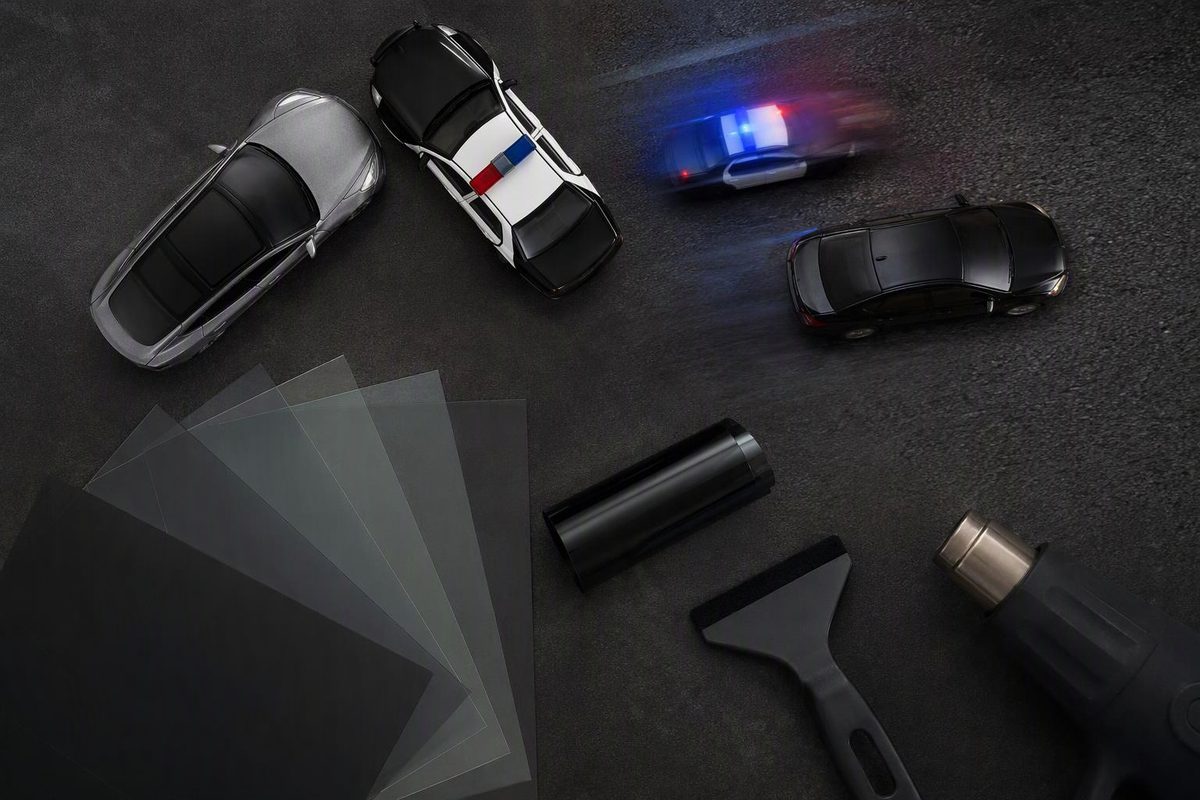
Police may be able to pull you over for suspected illegal tint, but that does not automatically authorize a pursuit if you drive away. The answer depends on applicable state law, the police agency’s pursuit policy and the circumstances. There is no reliable nationwide “yes” or “no.”
Most importantly, a policy restricting chases is not permission to ignore an officer’s signal to stop.
A tint stop is not the same as a chase
Three separate questions matter:
- Can the officer stop you? State law and the legal grounds for the stop matter.
- Can the officer pursue a fleeing vehicle? Applicable law and the agency’s pursuit rules matter; authority to stop does not settle this question.
- Can the driver face charges for fleeing? Failure to stop can become a separate offense from the original tint violation.
For example, the Florida Highway Patrol’s published tint-meter policy, revised June 16, 2021, requires reasonable suspicion for tint-based stops. It also allows officers conducting a traffic stop to use a meter to determine compliance. A meter reading is therefore not necessarily required before the stop.
Virginia provides a contrasting rule: Virginia Code § 46.2-1052(P) expressly prohibits officers from stopping a vehicle for a violation of that section. That restriction does not make otherwise prohibited tint legal or prevent a stop on a separate lawful basis.
State provisions checked October 26, 2026.
Can an officer pursue you after a tint stop?
Do not assume that authority to make the stop also means authority to continue a chase.
The Police Executive Research Forum’s 2023 pursuit guide, published by the federal COPS Office, describes policies ranging from officer discretion and supervisory review to tightly restricted or prohibited pursuits. Restrictive policies generally prohibit pursuits arising from minor traffic violations. This guide describes policy approaches; it is not a nationwide pursuit law.
For a particular incident, the relevant questions include which agency was involved, what law and policy applied at the time, what officers knew and whether their conduct met that policy’s definition of a pursuit.
What the Coral Springs tint case shows
A May 5, 2024, crash in Coral Springs, Florida, killed six-year-old Harlow Tran. According to police records described by Coral Springs Talk, the driver fled an attempted stop based on suspected excessively dark tint. Her family filed a wrongful-death lawsuit against the city, alleging an improper pursuit. The city denies that an improper pursuit occurred.
NBC 6’s investigation reports that Coral Springs policy permits pursuits only in cases involving possible violent felonies and states that “vehicle pursuits will not be initiated for traffic related offenses.” It also requires officers to make a 90-degree turn away from the suspect vehicle—or stop if a turn is not possible—when pursuit criteria are not met.
The family alleges the officer continued following; the city says he deactivated his lights and siren and complied with policy. NBC 6 reported that department supervisors found him in compliance. These are disputed allegations and responses—not a court finding that police may, or may not, chase anyone over tint nationwide.
Fleeing can be much more serious than the tint violation
In Florida, violating the front-side-window tint statute is a noncriminal, nonmoving traffic infraction.
By contrast, Florida Statutes § 316.1935(1) makes knowingly and willfully refusing or failing to stop when ordered by a duly authorized officer a third-degree felony. Other subsections address aggravated fleeing. Those are Florida rules, not a national penalty schedule.
What to do if police signal you to stop
Slow down and pull over safely off the roadway. Keep your hands visible and avoid sudden reaches for documents. South Miami’s official traffic-stop guidance recommends those steps and advises contesting a citation in court rather than arguing at the roadside.
If you believe the stop or pursuit was improper, preserve the citation and relevant details for a lawyer or complaint—not a roadside escape.
Before installing or replacing tint, verify your state’s current rules for each window and any exemption documentation. Ask the installer to check the finished glass-and-film light transmission, not just the film’s advertised percentage. Legal darkness is a separate decision from choosing a film for heat control; our automotive tint selection guide explains the broader comparison.
This is general information, not advice about a specific case.