
The Best Automotive Window Tint Is a Film-and-Installer Match
Compare ceramic, dyed and metallic car tint by heat rejection, clarity, warranty, installation quality and legal finished VLT.
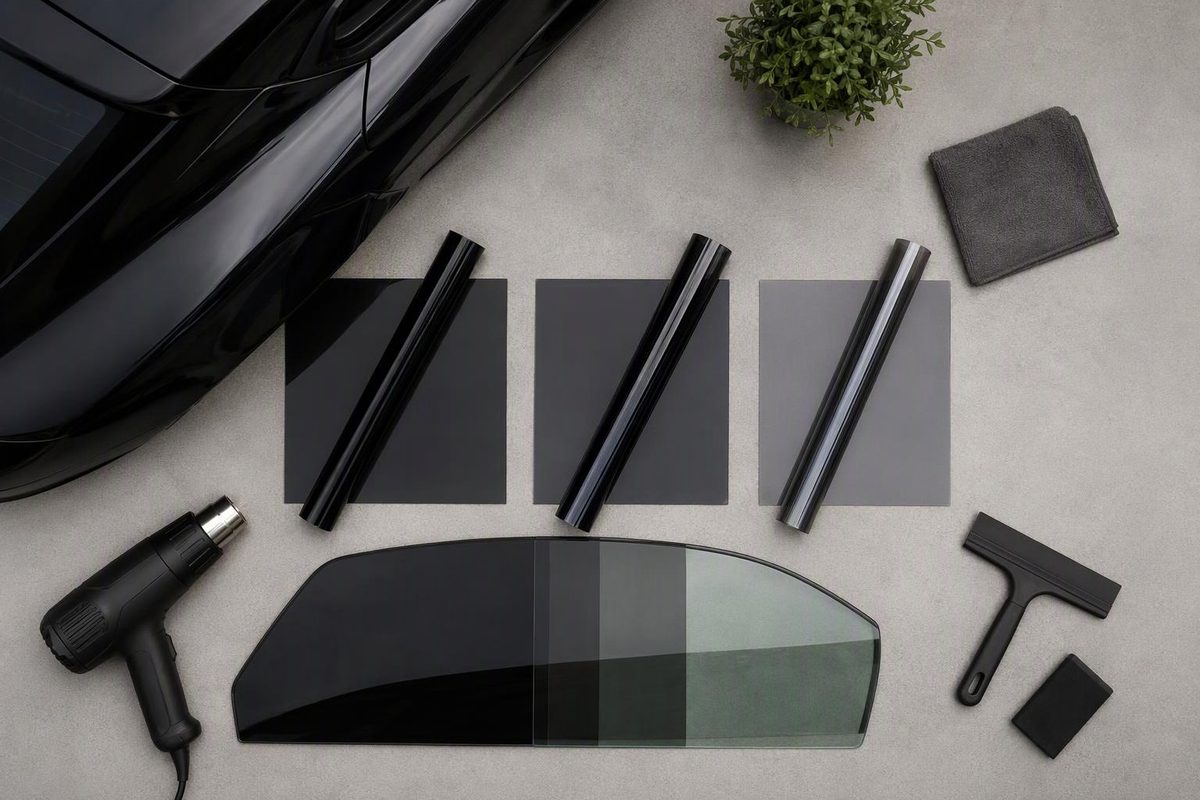
For many drivers, a midrange ceramic film installed by a proven shop at a legal visible-light-transmission level is the best place to start. It can provide useful heat control without metal-related signal concerns while avoiding the highest price tier.
It is not a universal winner. Installation quality can matter more than a small difference on a specification sheet, and “best” changes with your climate, budget, night visibility, factory glass and local law.
Best choices by priority
| Your priority | Best starting point | Product families to quote locally | Main trade-off |
|---|---|---|---|
| Best balance for many drivers | Midrange ceramic | LLumar CTX or IRX, XPEL PRIME XR, 3M Ceramic IR, SunTek CIR | More expensive than dyed film |
| Higher published heat performance within a brand | Premium ceramic or multilayer optical film | LLumar FormulaOne Stratos, XPEL PRIME XR Plus, 3M Crystalline | Highest cost; gains over midrange film may be modest in normal use |
| Heat rejection with a light appearance | High-VLT premium film | 3M Crystalline, LLumar AIR or Stratos 70, lighter ceramic shades | Limited privacy and glare reduction |
| Budget professional installation | Color-stable dyed film | LLumar ATC or a comparable warranted line | Lower heat rejection than good ceramic film |
| Non-ceramic solar control | Metallized or hybrid film | LLumar ATR or a comparable line | More reflective appearance and possible electronic-compatibility concerns |
These are comparison candidates, not claims that every shop carries the same version or installs it equally well.
Why midrange ceramic is the practical default
Ceramic tint separates darkness from heat performance better than basic dyed film. That matters because choosing a darker shade solely to make the cabin cooler can reduce nighttime visibility and may violate the limit for a particular window.
Manufacturer data illustrates the difference within one brand. On LLumar’s March 2026 sheet, the nominal 35 shade of color-stable dyed ATC measures 38% VLT and 35% total solar energy rejection (TSER). CTX 35 measures 37% VLT and 48% TSER, while IRX 35 measures 39% VLT and 54% TSER. These figures were calculated on 1/4-inch clear glass under NFRC guidelines, so they help compare those LLumar lines but do not guarantee results on your car (LLumar performance data).
XPEL’s June 2026 preliminary technical sheets report whole-line ranges rather than shade-by-shade figures: PRIME XR spans 42%–66% TSER and 55%–64% IRER, while XR Plus spans 52%–71% TSER and 67%–70% IRER. Both are metal-free ceramic products, with XR Plus positioned as the top-tier option (PRIME XR data; PRIME XR Plus data).
The sensible buying move is to price one established midrange ceramic and one premium film from the same installer. Pay the premium only if the specification difference, appearance and warranty terms justify it for your vehicle and driving conditions. Our separate guide examines when ceramic tint is worth the added cost.
Match the premium film to the job
For high published heat rejection within LLumar’s range: FormulaOne Stratos is a strong candidate. At its nominal 35 shade, the March 2026 sheet reports 39% VLT, 58% TSER and 67% IRER on clear glass. FormulaOne also carries a transferable lifetime limited warranty, subject to its terms (Stratos specifications; Stratos warranty overview). XPEL’s site also advertises a transferable lifetime warranty for its automotive tints, covering listed failures such as bubbling, peeling, cracking and discoloration (XPEL warranty overview).
For heat rejection without making the glass very dark: 3M Crystalline deserves a quote. It is a non-metallized multilayer optical film offered in listed VLT levels from 30% through 80%. 3M reports up to 64% TSER and positions the line as a way to reject substantial heat while preserving a lighter appearance (3M Crystalline).
For a conventional ceramic option with broad shade choice: 3M Ceramic IR is offered in listed VLT levels from 5% through 70% and uses a metal-free construction. Its peak claims are 66% TSER and 95% infrared rejection, but that infrared figure covers only 900–1,000 nm and should not be compared directly with full-spectrum IRER (3M Ceramic IR specifications). SunTek CIR is another non-metal ceramic line with multiple shades and a lifetime limited warranty against specified failures including peeling, cracking, adhesive failure, delamination and color change (SunTek CIR).
Compare numbers without falling for an IR demonstration
Ask for the current manufacturer sheet and compare:
- VLT: How much visible light passes through. Higher means lighter.
- TSER: The share of total solar energy rejected. This is a useful single heat-control number when test conditions match.
- IRER: A broader infrared measure that accounts for absorbed and reradiated energy.
- Visible-light reflectance: Important for appearance and local reflectivity rules.
- Warranty coverage: Look for named coverage, exclusions, transferability and whether labor is included.
Do not rank films by an isolated “99% IR rejection” claim. Manufacturers may measure different wavelength bands, use different glass and report either film-only or film-on-glass results. The cited 3M data uses 73% VLT green automotive glass, LLumar uses clear glass under NFRC guidelines, and the cited XPEL sheets use 1/8-inch glass and EN 410 methodology. Cross-brand figures are therefore screening tools, not a laboratory head-to-head.
UV rejection is also a weak tie-breaker among these products: 3M, LLumar, XPEL and SunTek all publish approximately 99% or greater UV rejection for the lines discussed. Heat performance, optical appearance, warranty and installation should decide the purchase.
Installation can overturn the product ranking
A premium roll does not prevent contamination, light gaps, creased film or damaged trim. Before booking, ask the shop to:
- identify the exact manufacturer, series and shade on the quote;
- show recent work with clean dot-matrix areas and close edge alignment;
- explain its remedy for dust, fingers, peeling or debris after curing;
- provide both the installer workmanship warranty and manufacturer warranty in writing;
- confirm that it is authorized to sell the stated line, if authorization is required;
- meter your existing glass and state the expected finished VLT.
The International Window Film Association recommends checking recent references, dealer experience, expected film life and the written manufacturer-backed warranty (IWFA buyer guidance). Fresh haze or small water pockets are not automatically defects, but use the signs in our window-tint bubble guide to distinguish curing moisture from a problem that needs review.
Choose legality and visibility before shade
The percentage printed on a film label is not necessarily the final reading after installation. As a rough estimate:
finished VLT = existing-glass VLT × film VLT
For example, 70% glass with 50% film produces about 35% VLT before product and meter tolerances. Rules can differ by window, vehicle class and jurisdiction, so check the current state-agency source and have the shop measure the completed glass-and-film combination. Do not rely on “legal everywhere” language.
A darker film provides more privacy and glare reduction, but it is not automatically the better heat film and can make unlit roads, pedestrians and mirrors harder to see at night. Compare the practical appearance of 35% tint and 20% tint only after identifying the legal limit for each window.
Finally, compare complete installed quotes rather than roll prices. Vehicle size, window count, difficult rear glass, old-film removal and windshield or sunroof coverage can change the total. The average tint-cost guide provides a useful baseline, but the winning quote should specify the film line, coverage, warranty and expected legal finished VLT—not just “ceramic tint.”