
How to Keep Your Vehicle’s Window Tint Within Tennessee Law
A 2025 code reproduction bars film below 35% VLT on covered windows and windshield alterations below 70%, plus pane and exemption caveats.
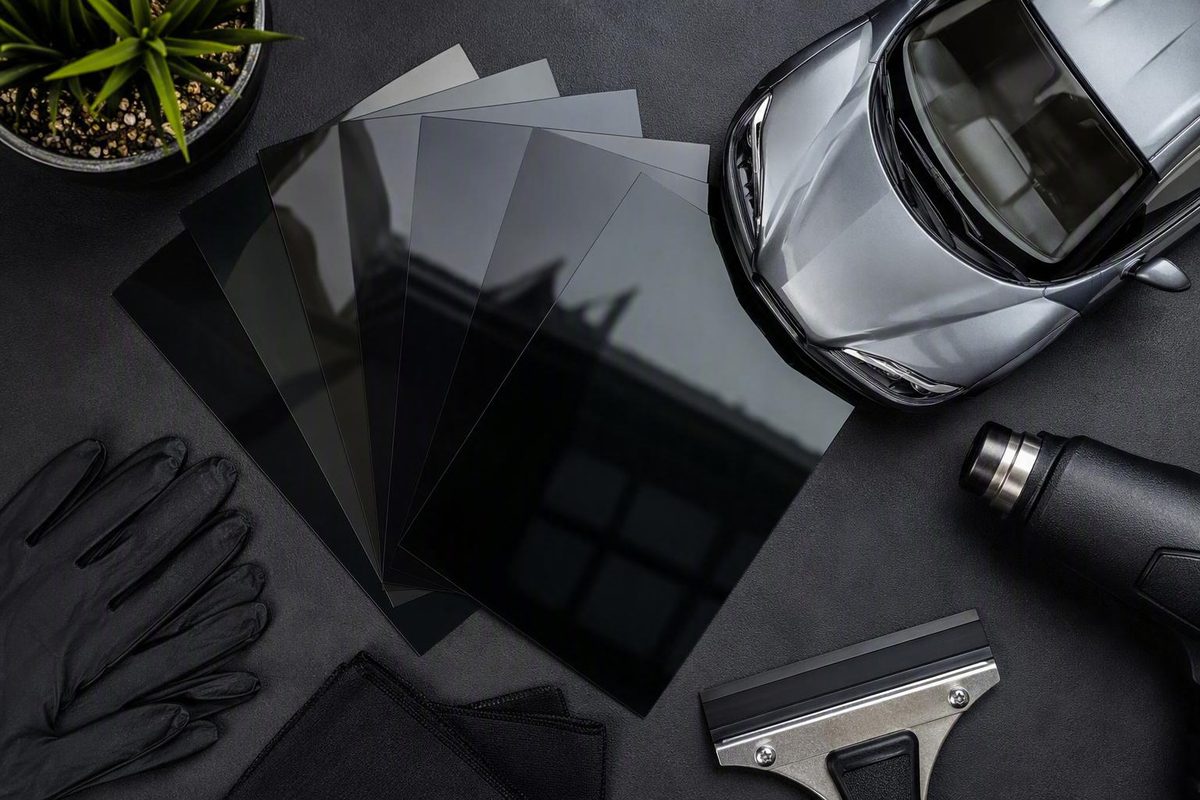
Tennessee’s window-tint rules are often reduced to two numbers: 35% visible light transmission (VLT) for covered side and rear glazing and 70% VLT for windshield alterations. That shorthand is useful, but it is not the complete legal analysis.
The available statutory wording describes material with VLT below 35% and separately prohibits windshield alterations that reduce windshield VLT below 70%. It also ties coverage to Federal Motor Vehicle Safety Standard No. 205. Factory glass, the classification of each pane, installer records, enforcement testing, and an approved medical exemption can therefore affect the practical answer.
Research status — checked September 6, 2026: The strongest supplied source for the ordinary limits is a third-party reproduction of the 2025 Tennessee Code, not an official Tennessee publication confirmed effective in 2026. This article is therefore an attributed interim summary, not verification of the current official code. Confirm the current statute and agency interpretation with Tennessee authorities before buying or installing film.
Tennessee tint limits at a glance
A third-party reproduction of Tennessee Code § 55-9-107 says it is unlawful to operate a vehicle on a public road when a covered window has been altered with material having less than 35% VLT. It separately prohibits an alteration that reduces windshield VLT below 70%, except for its treatment of the manufacturer’s standard installed shade band. The reproduction warns that it may not be the most recent or accurate version.
The following table tracks that wording carefully rather than treating a commercial tint chart as controlling law:
| Window area | Wording supported by the 2025 statutory reproduction | Practical approach |
|---|---|---|
| Windshield outside the separately treated manufacturer-installed shade band | An alteration may not reduce windshield VLT below 70%. (§ 55-9-107(a)(1)(B), 2025 third-party reproduction) | Do not assume that a nominally clear, 70%, or 80% film is automatically lawful across the windshield. Confirm both the resulting VLT and whether the proposed alteration is permitted. |
| Front-door windows | Covered windows may not be altered using material with VLT below 35%. (§ 55-9-107(a)(1)(A), 2025 third-party reproduction) | Ask what percentage describes the film itself and what the completed glass-and-film combination is expected to meter. Leave a reasonable compliance margin. |
| Other covered side windows | The same material-based 35% wording applies if the pane falls within the glazing covered by the statute. (§ 55-9-107(a)(1)(A), 2025 third-party reproduction) | Verify the federal glazing classification of each rear-side, quarter, sliding-door, or cargo pane instead of relying only on vehicle body style. |
| Covered rear window | The material-based 35% provision applies when the rear pane is among the windows addressed by the statutory language. (§ 55-9-107(a)(1)(A), 2025 third-party reproduction) | Do not assume that every hatch, liftgate, or cargo-area pane is regulated identically—or that every one is unrestricted. |
The distinction between film VLT and finished-window VLT deserves care. Section 55-9-107(a)(1)(A), as reproduced, expressly refers to installed material having VLT below 35%. It does not use precisely the same finished-result phrasing found in the windshield clause, which addresses an alteration reducing windshield VLT below 70%.
The supplied evidence does not conclusively resolve how Tennessee authorities apply that distinction when a meter measures the completed side window. Consequently, this article should not be read as establishing that the statute expressly says every covered side or rear pane must itself meter at least 35%. The prudent approach is nevertheless to avoid choosing a product or combination likely to produce a finished reading below 35%, because practical field testing measures transmitted light through the assembled pane.
Exactly 35% material is not facially “less than” the reproduced 35% threshold. That does not mean a box labeled “35% tint” guarantees compliance. The label may describe only the film, while an officer’s meter may assess light passing through both the original glass and the added film.
Commercial charts commonly list 35% for Tennessee front-side, back-side, and rear windows. One 2025–2026 national tint chart also says windshield tint may be used above the manufacturer’s AS-1 line. That chart expressly disclaims guaranteed accuracy and does not supply the federal-glazing analysis needed to determine the status of every rear or cargo pane.
The safest shopping rule is therefore not “buy 35% film.” It is:
- Identify the legal treatment of each pane.
- Determine the VLT of the existing glass.
- Ask what the proposed film rating means.
- Estimate the combined result.
- Meter the completed installation.
- Preserve the required installer records.
What VLT means—and why a 35% film may not be legal
Visible light transmission is the percentage of visible light that passes through glazing. A higher percentage means more visible light passes through; a lower percentage means darker glazing.
For comparison:
- A nominal 70% product transmits more visible light than a 35% product.
- A 35% product transmits more visible light than a 20% product.
- A 5% product—often called “limo tint”—is much darker than either.
Convert each percentage to a decimal before multiplying. This is an estimate, not a legal test or guaranteed meter result.
If existing glass is estimated at 80% VLT and 40% film is added:
0.80 × 0.40 = 0.32
The estimated combined result is 32% VLT. That illustrates why film labeled above 35% can still produce a completed pane that transmits less than 35% of visible light.
With the same estimated 80% glass and 50% film:
0.80 × 0.50 = 0.40
The estimated combined result is 40% VLT, which provides more practical room above a 35% reference point.
These calculations should be treated as planning illustrations only. The supplied evidence supports the importance of checking the completed pane but does not provide a Tennessee-approved formula, tolerance, calibration method, or guaranteed relationship between an installer’s reading and an official field result.
Before approving an installation, ask the shop to:
- Meter the untreated glass.
- Identify the rated VLT of the proposed film.
- Clarify whether its quoted percentage refers to the film or the expected completed pane.
- Estimate the combined VLT.
- Meter each relevant window after installation.
- Record the post-installation readings on a dated work order.
A tint meter is a small device positioned across the glass so it can measure how much visible light passes through the pane. A FOX13 Memphis social-media report describes the device as having components placed on opposite sides of the window. The report is useful for understanding basic meter operation, but it is not a legal authority or statewide testing protocol.
Nor does a film specification prove what the assembled window will transmit. If compliance depends on staying near a boundary, leaving a meaningful buffer is more prudent than designing an installation to land exactly on the apparent minimum.
Windshield tint and the shade-band problem
The windshield rule requires special caution because the statutory reproduction and commercial summaries do not describe the upper windshield area in the same way.
The reproduced statute prohibits an alteration that reduces windshield VLT below 70%, while expressly excepting or separately treating the manufacturer’s standard installed shade band. (§ 55-9-107(a)(1)(B), 2025 third-party reproduction)
That language does not itself establish all of the following commonly repeated propositions:
- Any aftermarket strip above the AS-1 line is lawful.
- Any strip within the top five inches is lawful.
- The strip may be any darkness.
- A five-inch measurement automatically substitutes for a missing AS-1 mark.
- A nominally clear film may cover the entire windshield.
By contrast, a commercial Tennessee tint guide says any darkness is permitted above the AS-1 line and suggests using five inches from the windshield top if the mark cannot be found. Because that guide is a secondary commercial source and its wording is broader than the supplied statutory reproduction, the difference should be treated as unresolved—not converted into permission.
Before installing an aftermarket brow, visor strip, or full-windshield film, seek a current state interpretation addressing:
- Whether an aftermarket upper strip is permitted.
- Whether the AS-1 mark controls its lower edge.
- Whether a five-inch substitute is recognized when no AS-1 mark is visible.
- Whether the strip is subject to a VLT requirement.
- Whether a factory shade band changes the analysis.
- Whether a nearly transparent full-windshield film is a permitted alteration.
Windshield zones: Treat the manufacturer-installed shade band at the top of the windshield as a separate area. Treat the remaining windshield as subject to the reproduced 70% rule. Do not interpret the upper zone as “aftermarket tint allowed” without current Tennessee confirmation.
A shop may offer 70%, 80%, or nearly transparent ceramic film and describe it as legal across the entire windshield. That statement does not establish legality. Existing windshield glass and added film can have a different combined VLT from the film’s package rating, and the legal question includes whether the alteration itself is permitted.
Medical necessity does not remove this limitation. Tennessee’s official exemption guidance expressly says the agency cannot grant an exemption for windshield tint. A certificate authorizing darker tint elsewhere should not be interpreted as permission to alter the windshield.
Until Tennessee confirms the treatment of the exact installation, the lowest-risk option is to avoid aftermarket windshield film and dark upper strips. If you proceed, request written guidance addressing the vehicle, windshield area, and proposed product rather than relying solely on an installer’s verbal assurance.
Cars, SUVs, vans, trucks, and statutory exceptions
Many tint websites divide their charts into sedans and multipurpose vehicles. The reproduced Tennessee statute is not organized that way. It refers instead to windows having transmittance specified by Federal Motor Vehicle Safety Standard No. 205. (§ 55-9-107(a)(1), 2025 third-party reproduction)
That reference makes broad body-style claims unreliable.
The supplied secondary sources also conflict. Commercial guides commonly list 35% for back-side and rear windows across Tennessee vehicle types. A 2025 WBBJ news report, however, attributed to a local tint shop the view that some truck, van, or SUV cargo-area and hatch windows have no tint requirement.
The shop statement may reflect a federal glazing distinction, but the report does not provide enough classification analysis to apply the statement to a specific pane. It does not support a blanket conclusion that every window behind the front doors may be tinted to any darkness.
Owners of SUVs, vans, pickups, crossovers, work trucks, and vehicles with factory privacy glass should have each pane considered separately:
- Driver’s front-door window
- Passenger’s front-door window
- Second-row movable glass
- Second-row fixed glass
- Sliding-door glass
- Quarter glass
- Cargo-area side glass
- Liftgate or hatch glass
- Rear window
The supplied sources do not provide a complete, authoritative method for consumers to decode the federal classification of these panes. If the installer cannot document the classification and legal basis for treating a rear pane as unrestricted, ask Tennessee authorities or a qualified vehicle-glazing specialist for a written answer. This guide cannot determine the status of an unidentified cargo or rear pane from body style alone.
Factory privacy glass must also be considered when aftermarket film is added.
The reproduced statute describes limited exceptions, including:
- Qualifying vehicles registered outside Tennessee.
- Certain law-enforcement vehicles, for windows behind the front doors.
- Vehicles owned or leased by licensed private investigators or investigation companies.
- Certain federally permitted vehicle windows.
Subdivision (a)(6) does not exempt the front door windows of any motor vehicle from the specifications of subdivision (a)(1)(A) Tennessee Code § 55-9-107 (2025) - Tinted motor vehicle windows :: 2025 Tennessee Code :: U.S. Codes and Statutes :: U.S. Law :: Justia.
An out-of-state plate is not an automatic exemption. The reproduced exception is conditional and depends on compliance with the registration state and the other stated requirements. Likewise, security, investigative, or commercial use does not by itself create private-investigator status; the reproduced language identifies particular ownership, leasing, and licensing conditions.
When a rear or cargo pane cannot be classified confidently, do not assume it is unrestricted. Obtain an authoritative interpretation before adding film that would be unlawful if the pane falls within the covered category.
Installer labels, receipts, and the owner’s proof
The reproduced installer provisions in § 55-9-107 define a professional installer as a person who installs tint in Tennessee for profit, barter, wages, or commission. The definition is not limited to a conventional retail tint shop.
A professional installer may not apply tint that causes the vehicle to violate the section. The installer must also place an adhesive compliance label in the lower-right corner of the driver’s window. (§ 55-9-107(a)(2)–(3), 2025 third-party reproduction)
The label must include:
- The installer’s business name.
- The legend “Complies with Tennessee Code Annotated, § 55-9-107.”
Inspect the label before leaving the shop. A manufacturer logo, warranty sticker, film serial number, or handwritten percentage is not the statutory label described in the reproduced section.
The professional installer must also provide a signed receipt containing:
- Installation date.
- Vehicle make.
- Vehicle model.
- Paint color.
- License plate number.
- Registration state.
- The statement “Complies with Tennessee Code Annotated, § 55-9-107, at date of installation.”
- The instruction “This receipt shall be kept with motor vehicle registration documents.”
These are statutory receipt elements in § 55-9-107(a)(4), as reproduced for 2025. Check every vehicle detail before accepting the paperwork, especially the plate number, registration state, make, model, and color.
The vehicle owner bears the burden of proving compliance under the reproduced statute. (§ 55-9-107(a)(5), 2025 third-party reproduction) That makes the receipt and label more than warranty materials, although neither document guarantees that a later official test will agree with the installer.
A practical owner file should contain:
- The signed statutory receipt.
- A photograph or copy of the driver-window compliance label.
- The ordinary invoice and warranty.
- The film manufacturer and product line.
- The stated VLT for the film applied to each pane.
- Available pre-installation and post-installation meter readings.
- Dated photographs of the completed installation.
- Any state-issued medical certificate and decal instructions.
Keep the statutory receipt with the registration documents, as the required receipt language directs. Retaining a digital copy is also sensible in case the paper original fades or is lost.
These records are evidence, not conclusive proof. A receipt cannot change the physical performance of a window, and a film box labeled 35% does not establish what an official device will read through the complete pane.
The supplied statutory reproduction does not fully explain how owners should document DIY tint, tint installed outside Tennessee, or film inherited with a used vehicle. A used-car buyer should have the windows metered and request any installation receipt, film record, or exemption certificate. If the history is unknown and a reading appears close to or below the relevant reference point, replacement or removal may be safer than relying on an unsupported product description.
Reflective tint, colors, and claims that need extra verification
Commercial tint guides describe metallic or mirrored tint as prohibited in Tennessee. That warning is relevant when screening products, but the supplied reproduction of § 55-9-107 does not independently establish the exact legal source, scope, or measurement method for such a restriction.
The terminology is also easy to blur:
- Reflectivity concerns how much light a surface reflects and how mirror-like it appears.
- Metallic-looking describes appearance, not necessarily material construction.
- Metalized film generally refers to film containing metallic material.
- Mirrored film describes a strongly reflective visual finish.
- Colored film changes the glazing’s hue but is not necessarily metalized or reflective.
Names such as “silver,” “chrome,” “smoke,” or “metallic” do not establish the product’s legal classification.
The supplied evidence does not provide primary authority for declaring particular red, amber, blue, or other tint colors illegal in Tennessee. A definitive prohibited-color list would therefore go beyond the available support.
Before buying reflective, mirrored, metallic-looking, metalized, or strongly colored film, obtain current written confirmation from both Tennessee authorities and the installer. The response should identify the controlling rule and clarify whether the concern is reflectance, construction, color, or a combination of those characteristics.
Do not treat “street legal,” “Tennessee legal,” or “DOT approved” marketing language as proof. Compliance can depend on the pane, the film, the installation area, the applicable VLT provision, and any separate product restriction.
Traffic stops, tint-meter tests, and penalties
A POST-certified officer who reasonably believes a violation exists has statutory authority to detain a vehicle on a public road for a field comparison test. (§ 55-9-107(c), 2025 third-party reproduction)
In practical terms, a tint meter may be positioned across an accessible window to measure the percentage of visible light transmitted through the pane. That measurement concerns the assembled glass and film, even though the reproduced side-window provision is worded in terms of material having VLT below 35%.
The legal authority to conduct a field test should be distinguished from claims about enforcement frequency. News reports from Memphis or Jackson demonstrate that tint-related stops can occur, but they do not establish a uniform enforcement rate, testing practice, or citation policy throughout Tennessee.
A stop may raise questions about:
- Whether the tint is aftermarket material or factory glazing.
- Which pane was tested.
- The meter reading.
- Windshield-film placement.
- The driver-window compliance label.
- The signed installation receipt.
- A medical certificate and decal.
- The factual basis for any claimed vehicle exception.
Violating § 55-9-107 is classified as a Class C misdemeanor in the reproduced statute. Refusing an officer-directed field comparison test is also classified as a Class C misdemeanor. (§ 55-9-107(d), 2025 third-party reproduction)
The supplied statutory excerpt does not specify a fine. Claims that every Tennessee tint citation costs a fixed $100, $200, $230, or another amount are therefore not supported here. Costs and outcomes may depend on the charge and local court proceedings.
Drivers should cooperate with lawful instructions. If asked for documentation, provide the statutory receipt, registration materials, and any state-issued exemption certificate without claiming that a private shop reading conclusively overrides an officer’s test.
If you receive a citation or dispute a stop or measurement:
- Preserve the citation and all vehicle documents.
- Photograph the affected windows, compliance label, receipt, certificate, and decal.
- Write down the date, location, tested pane, reported reading, and surrounding circumstances.
- Do not alter evidence if qualified counsel advises preserving the vehicle in its cited condition.
- Arrange an independent meter test if appropriate.
- Observe every court or response deadline.
- Consult a Tennessee attorney about the specific charge and available defenses.
How to apply for a Tennessee medical tint exemption
A doctor’s note alone does not create a Tennessee tint exemption. The request must go through the state’s approval process.
According to the State of Tennessee’s official window-tint exemption instructions, the applicant must email Driver.Improvement@tn.gov and include:
- A doctor’s note.
- A copy of the vehicle registration.
- The driver’s license number.
The agency reports an approximate processing time of three to four weeks. Once the process is completed and the request is approved, the driver receives a decal and a certificate bearing the commissioner’s signature. (State of Tennessee window-tint exemption instructions)
This procedure corresponds with the reproduced statute’s framework for a physician-certified request, medical review, and a state-issued certificate or decal. The supplied materials do not provide a complete list of qualifying diagnoses or promise a particular authorized tint level. (§ 55-9-107(e), 2025 third-party reproduction)
Do not install darker-than-ordinary tint while the application is pending. Submission is not approval, and a physician’s recommendation is not a substitute for the state-issued credentials.
The official agency guidance also says Tennessee cannot grant a medical exemption for windshield tint. An approval for eligible side or other windows must not be extended to the windshield.
After approval:
- Read the certificate for its limits and vehicle-specific conditions.
- Display the decal exactly as directed.
- Keep the certificate available in the vehicle.
- Give the installer a copy before installation.
- Have the completed windows metered and documented.
- Do not exceed the degree of tint authorized.
The supplied agency page does not resolve several practical issues. Ask Driver Improvement to confirm:
- How long approval remains valid.
- Whether renewal is required.
- Whether the approval applies to only one vehicle or registration.
- Whether it transfers after a vehicle is replaced or sold.
- Which medical conditions qualify.
- What degree of tint may be approved.
- How to replace a lost certificate or decal.
- Whether both credentials must remain with the vehicle.
Use the state email address for the request. An installer may help select and measure film, but a shop cannot issue Tennessee’s medical approval.
Frequently asked questions
Is 35% tint legal in Tennessee?
The reproduced 2025 statute says covered windows may not be altered using material with VLT below 35%. Exactly 35% material is therefore not facially below that wording. (§ 55-9-107(a)(1)(A), 2025 third-party reproduction)
That does not guarantee that film labeled 35% will be treated as compliant on a particular vehicle. Existing glass plus film can produce a darker completed reading, and the supplied evidence does not conclusively resolve the relationship between the material-based statutory wording and every field measurement of an assembled side or rear pane.
For a conservative installation, choose film expected to leave the complete window with meaningful room above 35%, have it metered, and verify that the pane falls within the applicable category.
Can I put a tint strip above the windshield’s AS-1 line in Tennessee?
Do not assume that every aftermarket AS-1 or top-five-inch strip is lawful. Commercial guides commonly describe tint above the AS-1 line as permitted, but the reproduced statute expressly refers to the manufacturer’s standard installed shade band while prohibiting alterations that reduce windshield VLT below 70%. (§ 55-9-107(a)(1)(B), 2025 third-party reproduction)
Obtain current Tennessee confirmation addressing whether an aftermarket strip is allowed, where it may extend, and what VLT or other restrictions apply.
Are Tennessee’s rear-window rules different for SUVs, vans, and trucks?
They may depend on the federal classification of each pane. The reproduced statute refers to glazing addressed by Federal Motor Vehicle Safety Standard No. 205 rather than presenting a simple sedan-versus-SUV table. (§ 55-9-107(a)(1), 2025 third-party reproduction)
Secondary sources conflict: commercial charts commonly list 35% for rear-side and rear windows, while a local-shop statement reported by WBBJ said some cargo-area or hatch windows on trucks, vans, and SUVs have no tint requirement. The supplied evidence cannot resolve that conflict for an individual pane.
Verify each rear-side, cargo, hatch, and rear window rather than assuming that every pane behind the front doors is unrestricted.
What do I need for a Tennessee medical tint exemption?
Email Driver.Improvement@tn.gov with a doctor’s note, a copy of the vehicle registration, and the driver’s license number. Tennessee says processing takes approximately three to four weeks and that an approved applicant receives a commissioner-signed certificate and a decal. These requirements appear in the official Tennessee exemption instructions.
Wait for approval before installing darker tint. The agency says it cannot grant an exemption for windshield tint.
What is the penalty for illegal window tint in Tennessee?
A violation of § 55-9-107 is classified as a Class C misdemeanor under the reproduced 2025 statute. Refusing an authorized officer-directed field comparison test is also classified as a Class C misdemeanor. (§ 55-9-107(d), 2025 third-party reproduction)
The supplied statutory excerpt does not specify a fine, so this article cannot support a guaranteed ticket amount. Review the citation, meet all response deadlines, and seek qualified Tennessee legal advice when necessary.
Pre-installation compliance checklist
Before authorizing a Tennessee tint installation:
- Check the current official law. The ordinary limits discussed here come from a third-party 2025 statutory reproduction, not an official code publication confirmed effective in 2026.
- Identify every pane. Do not rely solely on the labels “car,” “SUV,” “van,” or “truck.”
- Verify uncertain rear glazing. Obtain an authoritative classification or interpretation for cargo, hatch, liftgate, quarter, and rear panes.
- Distinguish film VLT from finished VLT. Ask whether a quoted percentage describes the film alone or the expected assembled window.
- Choose a practical buffer. Avoid designing the installation to sit exactly at an apparent boundary.
- Meter before and after installation. Keep the readings as supporting records while recognizing that they do not bind law enforcement.
- Inspect the driver-window label. It should be in the lower-right corner and contain the installer’s business name and statutory compliance legend.
- Obtain the signed statutory receipt. Check the date, vehicle details, required compliance statement, and registration-document instruction.
- Keep records with the vehicle. Preserve the receipt, label photograph, film details, meter readings, and any exemption credentials.
- Complete medical approval first. A doctor’s note or pending application is not a state-issued exemption.
- Do not extend an exemption to the windshield. Tennessee’s agency guidance says windshield tint cannot be medically exempted.
- Confirm special products in writing. Seek current guidance before purchasing windshield film, an aftermarket shade strip, mirrored or reflective film, metallic-looking film, or strongly colored film.
The safest answer to what constitutes legal tint in Tennessee is not found solely in a shade name or percentage printed on a film box. It depends on the statutory treatment of the pane and material, the light transmitted through the completed installation, required documentation, and current Tennessee guidance.