
Washington’s Tint Limit Depends on Your Glass and Vehicle
Check Washington’s 24% finished-VLT requirement, rear-window exceptions, windshield restrictions, installer stickers and medical exemption requirements.
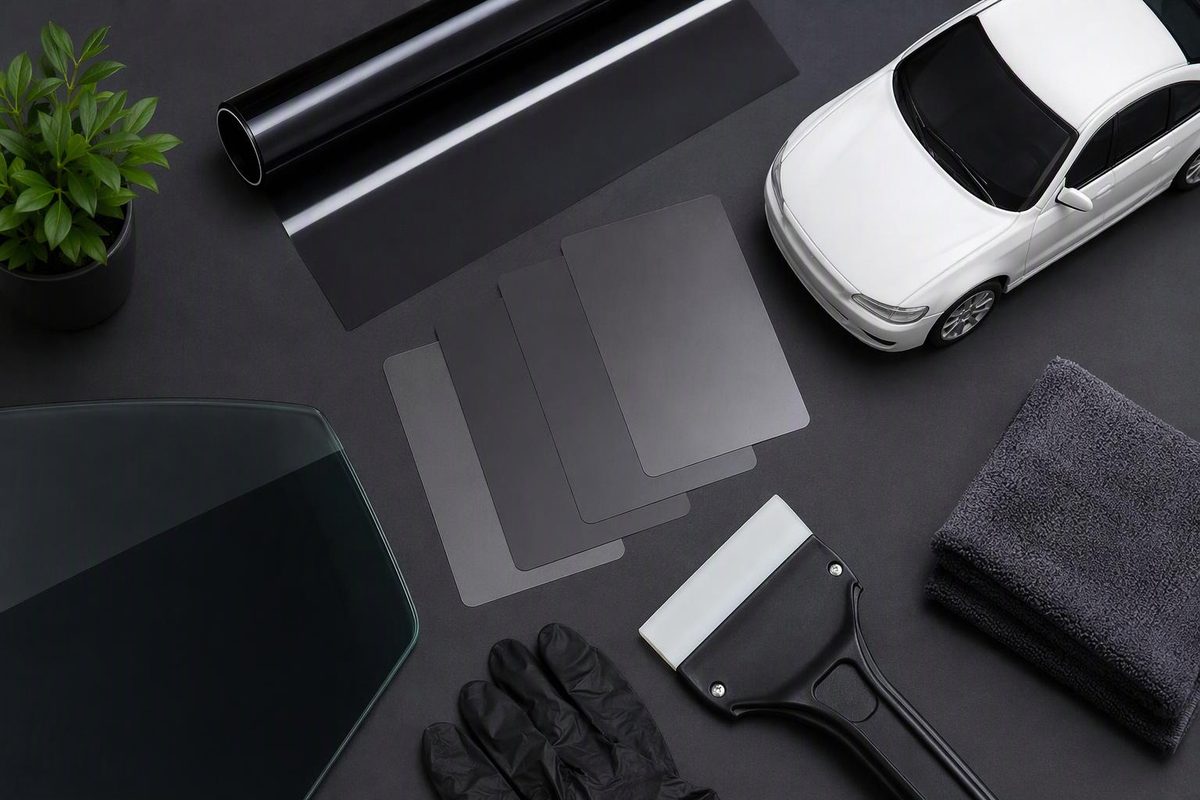
In Washington State, aftermarket tint on ordinary passenger-car side and rear windows must leave at least 24% visible light transmission (VLT). Manufacturer-identified trucks, motor homes and multipurpose passenger vehicles can have darker tint behind the driver, subject to other requirements. The windshield has separate rules—not a 24% allowance. These limits come from RCW 46.37.430.
This guide covers Washington State, not Western Australia. It is general information, not legal advice; verify current requirements with Washington State Patrol before installation.
Choose your window category and enter glass and film VLT percentages to estimate the finished darkness.
Finished-VLT Estimate
Use the glass reading before film is added, not a reading through existing film.
~28% Finished VLT
Above the ordinary 24% minimum.
Planning estimate only. Meter the completed window; this does not establish legal compliance.
Scope and Other Requirements
The ordinary 24% limit applies to front side windows and ordinary passenger-car rear windows. The rear exception requires manufacturer identification as a truck, motor home or multipurpose passenger vehicle and applies only behind the driver.
Non-windshield film must also meet the 35% maximum total reflectance, material, single-layer and exterior-mirror requirements. This tool does not assess windshields, medical exceptions, other special vehicle categories or commercial vehicles subject to 49 CFR Part 393.
Estimate: glass VLT × film VLT ÷ 100. Film labels and calculations are not certified finished-window readings.
Source: Washington RCW 46.37.430; estimates use the article’s glass-times-film calculation, not measured compliance data.
Washington Tint Limits by Window
VLT measures how much visible light passes through: a lower percentage means darker tint. Washington defines “net film screening” to include both the manufacturer’s coloring and added film, so the limit is not simply the number printed on the film box.
| Window | Ordinary Passenger Car | Qualifying Truck, Motor Home or MPV |
|---|---|---|
| Front side windows beside driver | At least 24% net VLT | At least 24% net VLT |
| Side windows behind driver | At least 24% net VLT | May be below 24% VLT |
| Rear window | At least 24% net VLT | May be below 24% VLT |
| Windshield | Restricted upper strip; clear UV-reducing film separately permitted | Same windshield rule |
The final column applies to manufacturer-identified trucks, motor homes and multipurpose passenger vehicles. These are the ordinary aftermarket-film rules; factory glazing and medical exemptions are addressed below.
For non-windshield film, total reflectance must be 35% or less, including on rear windows allowed darker tint. Both exterior rearview mirrors are required when non-windshield film is applied. The statute also grants rear-window darkness exceptions to certain other vehicles, including hearses, collector vehicles and specified passenger-transport and emergency vehicles. Source: RCW 46.37.430(2), (5)(a)–(b), (f).
Do not rely on an SUV badge or a seller’s description alone. Ask the installer to verify the manufacturer’s classification, especially for crossovers and vans. The truck, motor home and multipurpose passenger vehicle exception follows that classification—not whether you use the vehicle for work.
20% Film Fails the Ordinary Limit; 35% Needs a Glass Reading
20% film is not a compliant choice under the ordinary rules for front side windows or passenger-car rear windows: it already transmits less than the required 24%, before accounting for the glass. It can meet the darkness requirement behind the driver on a qualifying truck or multipurpose passenger vehicle, but reflectance, material and mirror requirements still apply.
35% film may comply, but its label is not proof. For planning, finished VLT ≈ glass VLT × film VLT, using decimal values.
| Glass VLT | Film VLT | Estimated Finished VLT |
|---|---|---|
| 80% | 35% | ~28% |
| 70% | 35% | ~24.5% |
| 80% | 30% | ~24% |
The last example is right at the threshold, with no planning margin. These are calculations, not certified readings. Have the installer measure the existing glass, choose a film with room above the minimum, and meter the completed windows. Our 35% tint guide explains the difference between film VLT and finished VLT.
Factory glazing that meets federal standards is separately protected by the statute; adding aftermarket film is a different question. Do not assume dark factory rear glass makes added film lawful on an ordinary passenger car. Source: RCW 46.37.430(5)–(6).
Windshield Tint Has Strip and Clear-Film Restrictions
Washington permits greater light reduction along the windshield’s top edge if the product is transparent and does not enter the AS-1 portion or extend more than six inches down from the top. Keep the strip within both restrictions; six inches is not automatic permission to cross the AS-1 boundary.
The law separately allows clear sunscreening film that reduces or eliminates ultraviolet light. That is not blanket permission for full-windshield dark tint, and a product advertised as “ceramic” or “70%” is not automatically compliant. Source: RCW 46.37.430(5)(e).
Film, Mirrors and Installer Stickers Must Also Comply
The Installer Must Supply a Compliance Sticker
A for-profit installer tinting restricted glazing areas must supply a compliance sticker to be affixed to the driver’s door post beside the manufacturer’s identification tag. It must show the business name and state tax identification number.
Film Cannot Be Stacked or Use Prohibited Materials
Installing more than one sheet on a window is prohibited. Old film needs to come off before a replacement sheet goes on.
Mirror-finish products, red, gold, yellow or black material, and brushed- or sprayed-on liquid film are prohibited.
Both Exterior Mirrors Must Provide the Required View
When non-windshield film is applied, both exterior mirrors must provide a roadway view at least 200 feet behind the vehicle.
These requirements apply alongside darkness limits—not instead of them. Source: RCW 46.37.430(5).
Medical Exceptions Require Written Physician Verification
A medical exception permits greater light reduction on windows and the top six inches of the windshield when the vehicle’s operator or passenger possesses written verification from a licensed physician stating that sunlight protection is needed for physical or medical reasons. Source: RCW 46.37.430(5)(d).
Washington State Patrol says there is no exemption form to submit: carry the physician’s verification in the vehicle at all times and provide it to law enforcement on request. This is not an exemption for a fully darkened windshield.
Covered Commercial Vehicles Have a Separate 70% Rule
For commercial vehicles subject to 49 CFR Part 393, do not order tint using the state’s 24% figure. 49 CFR 393.60(d) requires at least 70% transmittance through the windshield and immediately adjacent side-window portions marked as requiring at least 70%. That federal transmittance restriction does not apply to the vehicle’s other windows.
WSP warns that commercial vehicles covered by this rule cannot be tinted to the state levels. Confirm which rules apply to your work truck or van before approving the quote.