
How 35% Tint Actually Looks and Measures
See what 35 percent tint looks like, calculate its final VLT over factory glass, compare heat rejection, and check legality for each vehicle window.
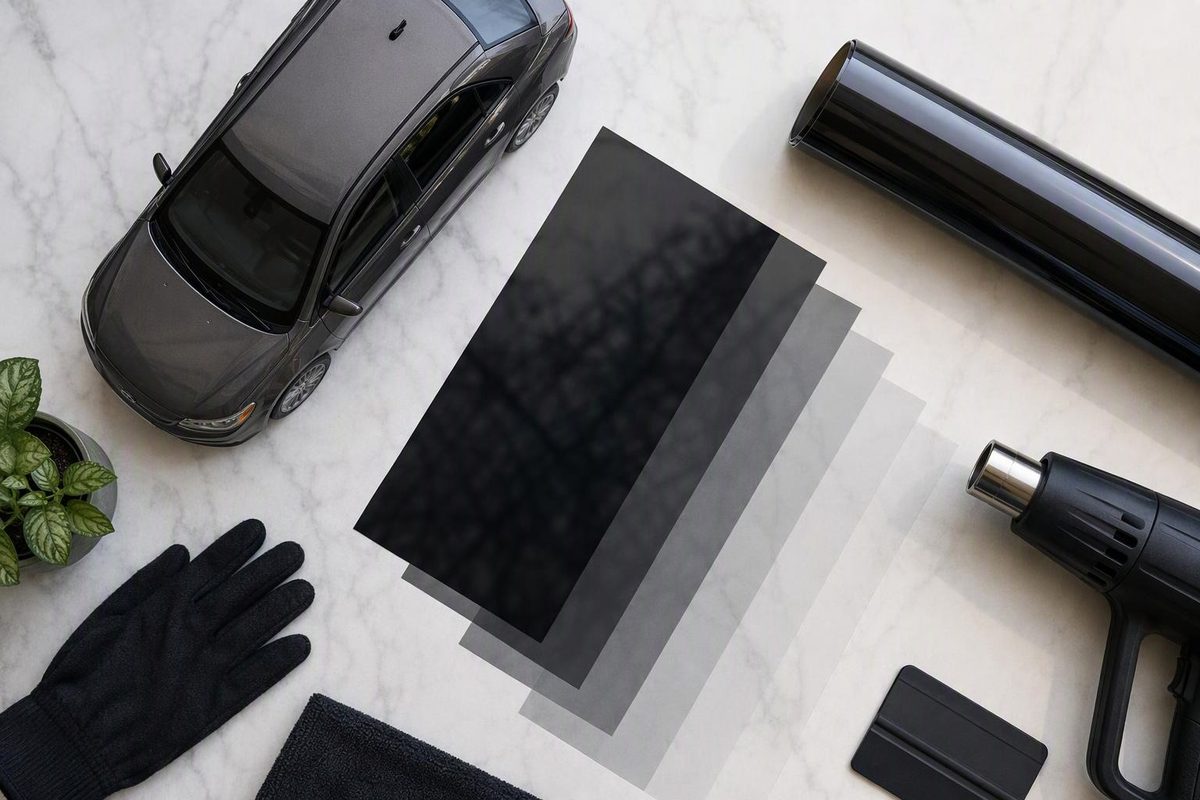
35 percent tint is a medium-dark shade with a nominal visible light transmission (VLT) of 35%. It gives glass a clearly smoked appearance with noticeable glare reduction and some daytime privacy, but the finished window may meter well below 35% because the film is installed over glass that already filters light.
Enter the measured VLT of your bare glass and chosen film to estimate the finished window.
Finished VLT Estimate
Use measured values when available. Both percentages must be from 0 to 100.
Formula: glass VLT × film VLT = estimated finished VLT.
Source note: The calculation uses the VLT multiplication method and examples cited in the article; actual results vary with glass, film and manufacturing tolerances.
What 35% Tint Looks Like
In daylight, 35% tint gives automotive glass a distinct smoked appearance. Occupants and interior details may remain visible when the cabin is brightly lit or viewed at close range. Reflections, dark upholstery, film color, glass color, windshield brightness and the sun’s angle can all make the same film look more private.
From inside, 35% is substantially darker than untinted glass but generally less restrictive than 20% or 5%. At night, every reduction in visible light matters. A Transport Canada analysis concluded that reduced transmittance can adversely affect night visibility. Its researchers measured five film-and-glass samples and used published contrast-sensitivity data to model effects at different luminance levels, ages and target positions. They also emphasized the analysis’s limitations (UNECE-hosted Transport Canada paper).
Drivers who frequently use unlit rural roads, reverse through dark areas or struggle with low-light vision should compare 35% with 50% from inside an actual vehicle before buying. A shade photograph is only a rough guide. A sample installed on similar glass and viewed from both sides in daylight and after dark is more useful.
A 35% Film May Produce a Much Lower Final VLT
VLT is the percentage of visible light transmitted. A higher number indicates a lighter film. The International Window Film Association says 70% film is nearly clear to the eye, while 15% appears nearly black from outside (IWFA).
Estimate the finished VLT by multiplying the glass VLT by the film VLT: glass VLT × film VLT = estimated finished VLT.
Examples for nominal 35% film are:
- 70% glass × 35% film = 24.5% estimated final VLT
- 80% glass × 35% film = 28% estimated final VLT
- 90% glass × 35% film = 31.5% estimated final VLT
This calculation is an estimate, not a substitute for a tint meter. The glass may not have the assumed VLT, and a film sold under a “35” shade name may not transmit exactly 35%.
LLumar’s 2025 North American data, for example, lists measured VLT values of 38% for ATC 35, 37% for CTX 35 and 39% for IRX 35 on its specified clear test glass (LLumar performance data). The same sheet says actual performance varies with glass type and normal manufacturing variation.
Ask the installer to meter the bare glass before installation and the completed window afterward. For more shade calculations, see ceramic tint percentages from 5% to 70%.
Whether 35% Tint Is Legal Depends on the Finished Window
There is no nationwide answer for aftermarket side-window tint. The applicable limit can change by state, window position, vehicle classification and exemption status. A law may regulate the combined glass-and-film result rather than the shade name printed on the film box.
Official state rules illustrate the differences:
- North Carolina: The statute requires at least 35% total light transmission on regulated windows and conclusively presumes a reading above 32% on an approved meter to comply. It contains separate windshield restrictions and exceptions for certain rear windows, vehicle types, out-of-state vehicles and medical permits (North Carolina General Statutes § 20-127). See the detailed North Carolina tint-law guide.
- Texas: Windows immediately beside the driver must have at least 25% light transmission when measured with the original glass. Texas imposes separate windshield, reflectance, mirror and rear-window conditions (Texas DPS). A nominal 35% film can therefore comply or be too dark depending on the underlying glass and final meter reading.
- New York: The windshield and front side windows must transmit at least 70% of outside light. The 70% requirement also applies to the rear side windows of listed passenger-car body styles, while the rear-window rule depends on the vehicle’s mirrors. Medical exemptions are available for qualifying conditions (New York DMV). A 35% film would not satisfy a 70% combined-window requirement.
Do not ask an installer to put “legal 35” on every window. Identify the registration jurisdiction, vehicle classification and window position first. Windshields commonly have different rules from side and rear glass, while medical and out-of-state exceptions vary by jurisdiction. Verify the current rule with the relevant motor-vehicle agency before installation.
Shade Darkness Does Not Determine Heat Rejection
Two 35-class films can look similarly dark yet perform differently. In LLumar’s cited data, dyed ATC 35 reports 35% total solar energy rejection (TSER), compared with 48% for ceramic CTX 35 and 54% for infrared-rejecting ceramic IRX 35. Their listed VLT values are close—38%, 37% and 39%—so the heat-performance difference cannot be inferred from shade alone.
Compare the following values on the manufacturer’s data sheet:
- VLT: Visible light passing through the filmed glass.
- TSER: Total solar energy rejected by the filmed glass.
- Visible-light reflectance: An indication of how reflective the result may look.
- Test glass and method: Required for a fair product comparison.
- Warranty coverage: Check the terms for bubbling, peeling, cracking and color change.
Do not compare one brand’s film-only infrared figure with another brand’s TSER. They measure different things. For example, 3M defines TSER as total solar energy rejected by filmed glass. Its IRER figure covers infrared energy from 780–2,500 nm and accounts for transmitted and absorbed energy that will be reradiated into the car. The brochure’s narrower IRR figure is measured on film with its liner and no glass (3M Ceramic IR brochure).
When 35% Tint Is the Right Choice
Choose 35% when you want a clearly tinted appearance, moderate daytime privacy and glare control, and local law permits the finished reading on the intended windows. Consider 50% instead when low-light visibility is the priority or the legal threshold leaves little margin. Consider 20% only after confirming legality and judging low-light visibility from the driver’s seat.
Before authorizing the job, get the exact film series and shade in writing. Ask for the bare-glass reading and predicted final VLT, verify the current rule for every window, and confirm that the installer will meter the completed work. If film type and budget are still open, compare carbon and ceramic tint before paying more solely for the word “ceramic.”