
Legal Tint in WI: 50% Front, 35% Rear—and Finished VLT Matters
Check Wisconsin’s legal tint limits by window, including finished VLT, windshield restrictions, factory glass, mirrors and medical documentation.
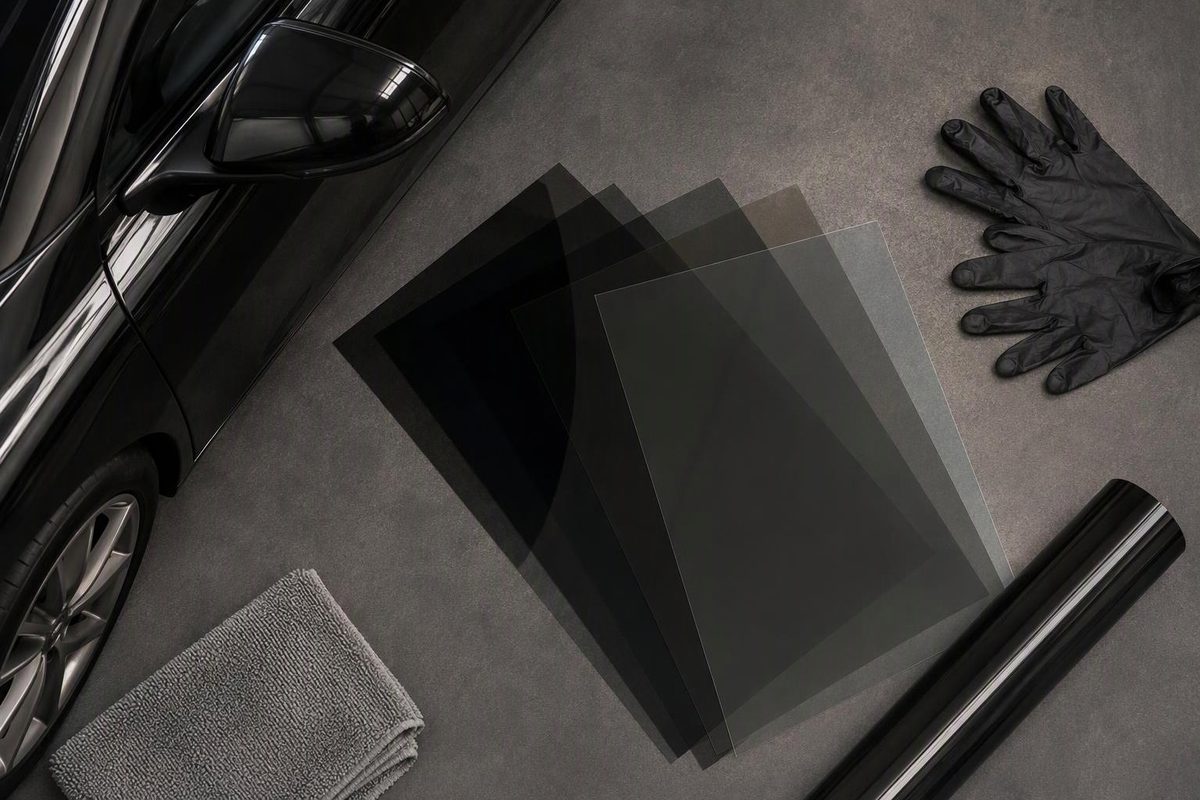
For ordinary aftermarket window film in Wisconsin, the finished glass must transmit at least 50% of visible light through the front side and vent windows and at least 35% through the rear side and rear windows. The film must be nonreflective. Those percentages apply to glass and film together, not just the number on the film box. Wisconsin Administrative Code, Trans 305.32
Reviewed October 14, 2026. General information, not legal advice; verify current requirements with Wisconsin DOT before installation.
Wisconsin tint limits by window
VLT means visible light transmission: a lower percentage means less visible light passes through.
| Window | Ordinary aftermarket tint rule |
|---|---|
| Front side and vent windows | At least 50% finished VLT; nonreflective film |
| Rear side windows | At least 35% finished VLT; nonreflective film |
| Rear window | At least 35% finished VLT; nonreflective film |
| Windshield | Film only on the permitted upper portion, above the manufacturer’s marked line and outside the windshield critical area |
The side/rear limits come from Trans 305.32; the windshield restriction comes from Trans 305.34. Wisconsin Administrative Code
Rear mirrors matter: if the rear window transmits less than 60% of visible light, the vehicle must have outside rearview mirrors on both the left and right sides. Two mirrors do not waive the 35% requirement for added film. Trans 305.32(5)
These provisions apply to automobiles, light trucks and motor homes. The aftermarket-film rules do not offer a separate unrestricted-rear-darkness exception for an SUV or light pickup. Applicability, tint provisions
Why “50% film” may be too dark up front
Glass already reduces light transmission. A useful estimate is:
Finished VLT ≈ glass VLT × film VLT, using decimal values. An installer’s explanation of combined VLT illustrates this calculation.
For example, assume the bare glass measures 80% VLT:
| Film VLT | Estimated finished VLT | Wisconsin ordinary-film result |
|---|---|---|
| 70% | 56% | Above the front-side minimum |
| 50% | 40% | Below the front minimum; above the rear minimum |
| 35% | 28% | Below both minimums |
| 20% | 16% | Below both minimums |
These are calculations, not measurements of your vehicle. Ask the installer to meter the existing glass, select film with a margin above the applicable minimum, and check the completed installation. Our tint-level guide explains the percentage choices in more detail.
Wisconsin’s rule directs law enforcement officers to allow a 3% measurement tolerance. Treat that as a testing allowance, not a reason to order a result below the stated 50% or 35% minimum. Trans 305.32(7)
Factory privacy glass is a separate allowance
The code separately permits windows tinted by the glazing manufacturer and installed during the original manufacturing process. That is distinct from adding film afterward. Dark factory rear glass therefore does not establish that an equally dark aftermarket installation is permitted—or that layering film over it is automatically compliant. Trans 305.32
For a used car, establish whether the darkness comes from factory glass, applied film or both before deciding what to remove or add.
Windshield film is not a full-glass option
Wisconsin permits aftermarket windshield film only on the inside upper portion that is both outside the critical area and above the manufacturer’s marked horizontal line. If the manufacturer did not affix that mark, the rule says no window tinting film may be attached to the windshield. Factory-tinted windshields have a separate allowance. Trans 305.34(6)
Do not substitute a generic “top five inches” rule or assume nearly clear film is exempt from this placement restriction.
Medical tint: 35% up front, with documentation
A recommendation from a treating physician or Christian Science practitioner can permit at least 35% finished VLT on front side and vent windows for the owner or an immediate family member. The film must remain nonreflective.
The written statement must be carried in the vehicle at all times and identify:
- The patient and medical condition justifying the recommendation.
- Whether the condition is temporary or permanent.
- The vehicle’s make, model, year and VIN.
Film installed under this provision must be removed when the vehicle is sold, the qualifying person leaves the owner’s household, or the temporary condition’s duration expires. This is not permission for 20% front tint or full-windshield film. Trans 305.32(4)(b)3 and Trans 305.34(6)
Before approving a quote, have the shop specify the expected finished VLT for each window, confirm nonreflective film, and identify any factory privacy glass or medical-documentation issue. “Wisconsin legal tint” alone is not a sufficiently precise installation specification.