
What Is Nano Ceramic Tint—and Is “Nano” Worth Paying For?
Nano ceramic tint uses tiny ceramic particles to control solar heat. Learn how it differs from ordinary ceramic labels and which specs matter.
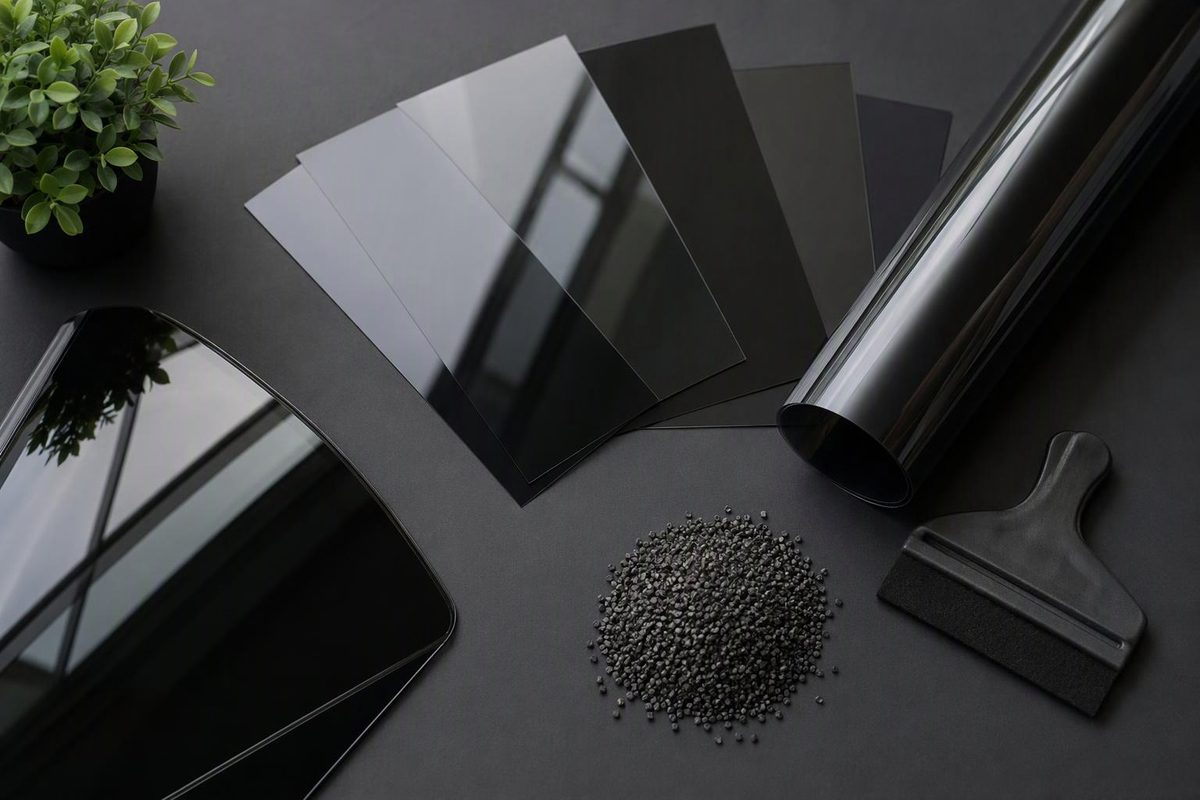
Nano ceramic tint is window film containing extremely small ceramic particles designed to reduce solar heat entering through the glass, particularly infrared energy. It is an applied film—not a ceramic coating wiped onto the window. LLumar describes its ceramic tint as ultra-thin film embedded with microscopic nano-ceramic particles; 3M describes its Ceramic IR film as using absorptive nano-ceramic technology. (LLumar, 3M)
For a buyer, the important distinction is this: “nano” describes the technology, not a guaranteed performance grade. Ask which film you are getting and what its specifications show before paying for the label.
Nano ceramic vs. ceramic: often the same family
Do not assume “ceramic” and “nano ceramic” are two separate levels of quality. Manufacturers use overlapping language. LLumar’s ceramic range includes several products using nano-ceramic technology, with different heat-rejection levels. 3M likewise calls its nano-ceramic product “Ceramic IR.” (LLumar ceramic range, 3M Ceramic IR)
A premium formulation can perform better, but that improvement should appear in the data—not just in an installer’s package name.
For example, LLumar’s October 2026 performance sheet lists CTX 15 and IRX 15 at the same 20% visible light transmission. CTX 15 rejects 53% of total solar energy, while IRX 15 rejects 59%. Their infrared energy rejection figures are 49% and 61%, respectively. Those are measurable differences between named products. The figures use nominal 6 mm clear glass, so they are comparisons under specified conditions, not predictions for every vehicle. (LLumar performance data)
What it can do—and what the label does not tell you
Control heat without necessarily making the windows very dark. Nano-ceramic technology is available in light, nearly clear films as well as dark shades. LLumar AIR, for instance, uses nano-ceramic technology in a virtually invisible film. Darkness and heat rejection are separate specifications. (LLumar AIR)
Avoid the signal-interference concern associated with metallized film. Check the exact construction: 3M identifies Ceramic IR as metal-free and states that it will not interfere with GPS, satellite radio or mobile devices. That is a product-specific claim, not a guarantee established by an unfamiliar film’s “nano” label. (3M product details)
Provide strong UV protection—but not uniquely. LLumar’s October 2026 sheet lists more than 99% UV protection for its dyed ATC, ceramic CTX and ceramic IRX products. UV rejection alone therefore does not establish that a ceramic upgrade is worthwhile. (LLumar performance data)
Privacy, glare reduction and visibility still depend on the shade you select. Use our ceramic tint percentage guide to compare those trade-offs separately from film chemistry.
How to read the heat-rejection claims
Three measurements matter most:
- VLT, or visible light transmission: Higher percentages mean more visible light passes through. Check whether the figure describes film alone or film applied to specified glass.
- TSER, or total solar energy rejection: Covers the solar spectrum rather than infrared alone. Compare it at similar VLT and on the same test glass.
- IRER, or infrared energy rejection: Covers solar infrared energy from 780–2,500 nanometres and accounts for absorbed energy subsequently released inward.
An advertised “95% infrared rejection” is not 95% total heat rejection. The European Window Film Association explains that selective infrared measurements may cover only a narrow wavelength range or omit absorbed energy released inward. Handheld measurements can consequently differ from full-spectrum laboratory results. (EWFA technical paper)
As a concrete example, 3M advertises up to 95% infrared rejection for Ceramic IR, but up to 66% total solar energy rejection. Its 2021 brochure defines that infrared figure over 900–1,000 nanometres—a much narrower range than IRER—and measures it on film with its liner, without glass. The brochure’s TSER figures describe film applied to automotive glass. These are different measurements, not interchangeable percentages of heat blocked. (3M product page, 3M brochure)
What to ask before booking
Get a written quote naming the manufacturer, product series, shade and windows included, rather than simply “premium nano ceramic.” Then ask for:
- The performance sheet for that exact product and shade.
- A finished-glass VLT check, plus verification of current rules with your state DMV before installation. A light-looking or ceramic film is not automatically legal.
- A sample to inspect for color and clarity, rather than relying only on a heat-lamp demonstration.
- Written warranty and workmanship terms, including who handles defects and what documentation you must retain.
- A like-for-like alternative quote covering the same windows and installation scope.
For budgeting, see car tint costs by film type. Pay the upgrade for documented performance you value—not merely for the word “nano.”