
When Paying More for Ceramic Window Film Makes Sense
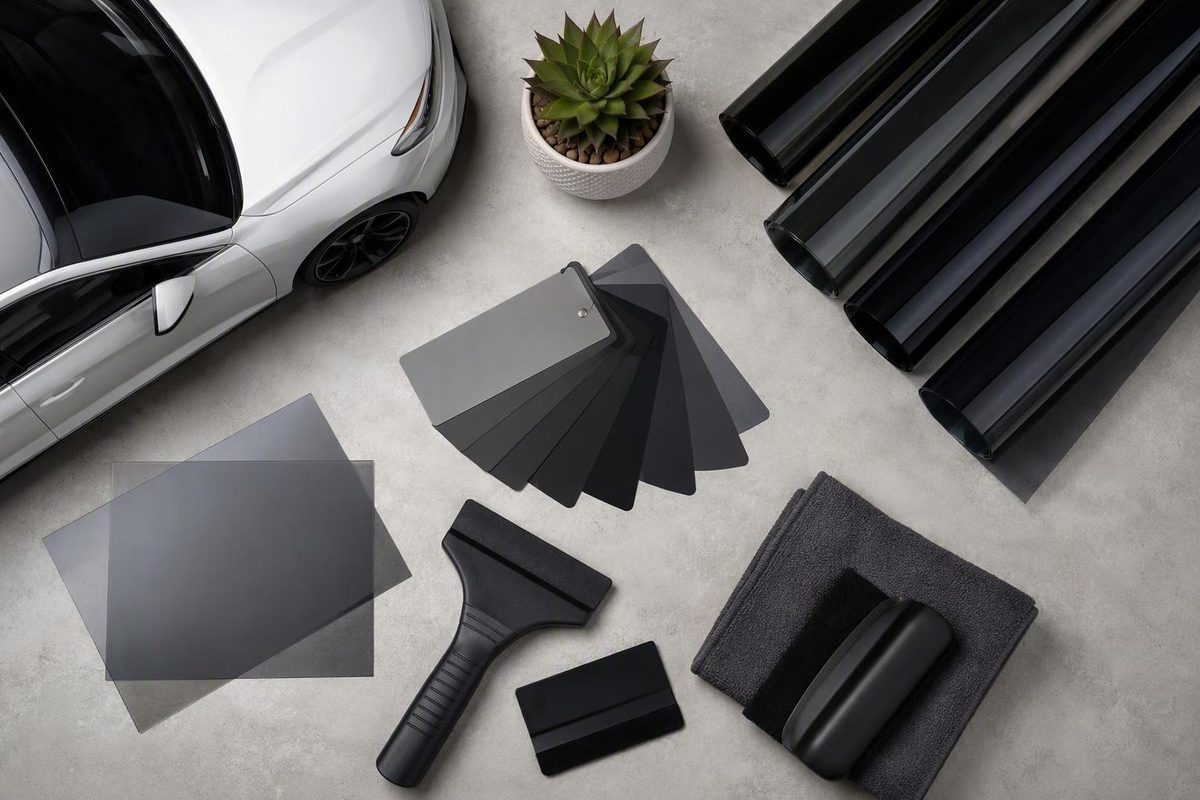
The short answer: ceramic tint is worth it for some drivers, not all
Ceramic window tint is easiest to justify when you drive frequently in a hot or sunny climate, park outdoors for long periods, own a vehicle with extensive glass, value cabin comfort, and expect to keep the vehicle for several years.
It is harder to justify when the car is usually garaged, the climate is mild, trips are short, you expect to sell or trade soon, or your main goals are appearance and privacy. In those cases, a quality carbon film—not necessarily the cheapest dyed film—may deliver most of the value you will notice for less money.
That conditional answer matters because “ceramic” is a film category, not a guarantee of measurable superiority. The useful comparison is between the exact ceramic and carbon products in your quotes, at the same visible light transmission (VLT), on the same windows, with the same removal work and comparable warranties.
Use this matrix as a first-pass decision:
| Decision input | Ceramic becomes easier to justify when… | Carbon may be enough when… |
|---|---|---|
| Climate and sun exposure | Summers are intense or sun exposure is sustained | The climate is mild or frequently overcast |
| Outdoor parking | The vehicle sits outside for hours most days | It is usually parked in a garage or covered space |
| Driving frequency | You commute daily or spend long periods in the vehicle | You drive occasionally or mostly take short trips |
| Glass area | The vehicle has large side windows, a steep windshield, or extensive roof glass | The cabin has relatively modest glazing |
| Ownership period | You expect to keep the vehicle for several years | You plan to sell, return, or trade it soon |
| Ceramic surcharge | The premium over comparable carbon is modest | The premium is large relative to the documented difference |
Treat those factors together. A large-glass crossover that spends every workday outdoors in an intensely sunny climate presents a stronger case for ceramic than a garaged sedan driven briefly in mild weather. Annual mileage alone does not settle the question; exposure, glass area, driving conditions, and ownership period all affect how often you can benefit.
The evidence has important limitations. Most detailed comparisons come from film manufacturers, sellers, and installers with a commercial interest in premium tint. Owner experiences are also mixed and uncontrolled: several participants in an enthusiast discussion reported improved perceived comfort or satisfactory long-term appearance, while at least one perceived no meaningful performance difference between ceramic and metalized tint. Those owners used different vehicles, films, shades, installers, and climates, so their experiences cannot establish a universal result.
The practical verdict is therefore not “ceramic always wins.” It is this: ceramic can be worth paying more for when its product-specific solar-control performance, installation quality, and warranty align with sustained sun exposure and long-term use. Do not assume a financial payback, a particular temperature reduction, or automatic superiority over every carbon or metalized film.
What ceramic tint is—and what the label does not guarantee
Automotive window films can be grouped broadly by the materials used to create their appearance and solar-control characteristics:
- Dyed film primarily uses dye to darken the glass. It is commonly positioned as the budget option for appearance, privacy, glare reduction, and low upfront cost.
- Carbon film incorporates carbon particles. It is generally sold as a nonmetallic middle ground between basic dyed film and premium ceramic products.
- Metalized film uses metallic particles or layers. It may offer useful solar control and durability, but some products can raise compatibility concerns involving wireless signals or vehicle systems.
- Ceramic film uses nonmetallic ceramic particles rather than relying primarily on dye or metal. Ceramic Pro, for example, describes its ceramic film category as using nonmetallic nano-ceramic particles rather than dyes or metals.
These are broad categories, not uniform performance grades. Two ceramic films can differ in construction, shade, optical characteristics, solar-control specifications, adhesive, warranty, and installed price. The same variation exists among carbon, dyed, and metalized products.
A premium carbon film may consequently be a better purchase than a low-grade product carrying a ceramic label. The word “ceramic” alone does not establish:
- how much total solar energy the film rejects;
- how it performs at your chosen VLT;
- whether its figures were produced using a comparable test method;
- how clear or hazy it appears;
- how stable its color will be;
- how well its adhesive will age;
- whether the installer will apply it cleanly; or
- what the warranty covers.
Carbon films may also be nonmetallic, so signal compatibility is not an advantage exclusive to ceramic. A fair comparison should not imply that every less-expensive alternative contains metal or will interfere with electronics.
Metalized film deserves separate treatment. Depending on the product, it may provide meaningful heat control and durability. Some metal-containing films may create signal concerns, but that does not prove every metalized product will interfere with every phone, radio, navigation receiver, toll transponder, or keyless-entry system. Ask about the exact film and your vehicle instead of accepting a categorical claim.
The practical rule is simple: never rank films by category name alone. Compare named products in the shades you are considering, using like-for-like specifications and written warranty terms.
The benefits ceramic tint can plausibly provide
What does the ceramic premium potentially buy? The strongest case centers on comfort, product quality, and suitability for sustained sun exposure—not speculative financial returns.
Less radiant heat felt through the glass
A quality ceramic film may reduce the solar energy passing through a window and the radiant heat occupants feel near the glass. This is most likely to matter during strong sun exposure, long commutes, repeated outdoor parking, or travel in vehicles with large windows or glass roofs.
That does not mean a parked car will remain cool. Tint can improve conditions without eliminating solar gain.
The useful question is not whether ceramic blocks “heat” in the abstract. It is whether the quoted ceramic product provides enough additional solar control over a quality carbon alternative—at the same shade and coverage—for you to notice and value.
Better day-to-day cabin comfort
Reduced radiant load can make sunny drives feel less harsh, particularly for people sitting beside large side windows.
Frequency compounds value. A modest comfort improvement experienced during two daily commutes can matter more than a larger theoretical advantage encountered only a few times per year.
A panoramic roof, large side glass, or extensive windshield area may strengthen the case for improved solar control. Coverage must still be evaluated window by window: treating the side and rear glass does not produce the same result as treating a roof or windshield, and windshield applications require a separate legal and visibility review.
Color stability and durability
Quality ceramic films are commonly marketed as more resistant to fading, discoloration, and degradation than entry-level dyed films. This is commercial positioning rather than proof that every ceramic film will outlast every alternative.
Actual longevity depends on the exact film and adhesive, climate, exposure, glass preparation, installation technique, curing, cleaning, and edge treatment. Ceramic film can still bubble, peel, scratch, haze, or change appearance if the product or installation fails.
Owner reports include examples of premium films retaining a satisfactory appearance for years, but anecdotes cannot establish a standard service life. A written warranty makes durability claims more useful only when it covers the relevant failure and the labor needed to correct it.
Nonmetallic signal compatibility
Ceramic film generally avoids the particular signal-interference concern associated with some metalized films because ceramic construction is nonmetallic. That may matter in vehicles dependent on navigation, cellular service, radio reception, toll tags, keyless entry, or other wireless systems.
The benefit needs three qualifications:
- Not every metalized film will produce noticeable interference.
- Carbon films may also be nonmetallic.
- Signal compatibility alone may not justify upgrading from quality carbon to ceramic.
If electronics are important, ask whether each exact product is metal-free rather than assuming that “regular tint” means metalized film.
UV protection—but not necessarily a unique advantage
Many ceramic products promote high ultraviolet rejection, but some quality carbon and other non-ceramic films make similar claims. Apeax, for example, says its carbon and ceramic products offer comparable UV protection while positioning ceramic as the stronger infrared-control option. Those are seller claims, not independent test findings, but they illustrate why UV performance should be compared by exact product.
If the carbon and ceramic products in your quotes provide similar documented UV performance at your chosen shades, UV protection alone is not a strong reason to pay more. The remaining comparison should focus on overall solar control, clarity, appearance, durability positioning, and warranty coverage.
What ceramic tint does not prove
A plausible comfort benefit is not an established financial return. The available evidence does not support calculating ceramic tint’s payback from:
- fuel savings;
- reduced air-conditioning use;
- improved EV range;
- lower maintenance costs;
- increased resale value; or
- avoided interior replacement.
Promotional material may suggest those outcomes, but vehicle-specific measurements and defensible cost data would be needed to establish them. Buy ceramic for performance and comfort you can evaluate—not because someone promises that it will pay for itself.
How to read tint specifications without being misled
Tint quotes often compress several different properties into one vague phrase: “heat rejection.” A useful comparison separates visible darkness, ultraviolet rejection, infrared rejection, and overall solar-energy performance.
VLT: how much visible light passes through
Visible light transmission (VLT) is the percentage of visible light transmitted under a stated configuration. A manufacturer may publish a nominal film VLT or a figure measured with film on specified reference glass. After installation, a meter evaluates the combined glass-and-film system.
In all cases, a lower VLT means less visible light passes through:
- Higher VLT produces a lighter appearance.
- Lower VLT produces a darker appearance.
- VLT describes visible-light transmission, not total heat control.
The film’s labeled or nominal VLT is not necessarily the final measured VLT of the vehicle window because the original glass already reduces some incoming light.
UV rejection: ultraviolet performance
High UV-rejection claims are not unique to ceramic. Ask for the specification applying to the exact product and shade rather than treating the phrase “UV protection” as sufficient reason to upgrade.
Infrared rejection: only part of the picture
Infrared-rejection figures describe performance over an infrared wavelength range.
An infrared-rejection percentage is therefore not interchangeable with total solar-energy rejection. It also cannot guarantee that a particular vehicle will remain a certain number of degrees cooler.
Widely different marketing figures do not necessarily describe equivalent tests. They may concern different products, shades, wavelength bands, glass types, or calculation methods. A maximum figure for a brand’s flagship film may have little relevance to the product written on your quote.
Overall solar-heat rejection
A specification sheet may use wording such as “total solar energy rejected.”
Confirm whether each figure applies to:
- film alone or film installed on specified glass;
- the exact VLT you selected;
- the quoted product line rather than the brand’s flagship film;
- the same test standard and glass configuration; and
- the whole solar spectrum or a selected wavelength range.
Without that context, two percentages may look comparable while measuring different things.
Why darker does not automatically mean cooler
Darkness and heat control overlap imperfectly. In a specific product comparison, a lighter high-performance film may provide better overall solar control than a darker basic film.
That possibility is a reason to inspect specifications—not permission to assume every light ceramic film beats every dark carbon or dyed film. The comparison must be established using data for the exact products and shades.
A salesperson’s heat-lamp display may help you feel a difference between samples, but it does not necessarily represent hours of full-spectrum sunlight on your vehicle. Treat it as a demonstration, not a cabin-temperature guarantee.
What to request from the installer
Ask for a specification sheet or manufacturer page showing:
- Brand and exact product line.
- Exact shade or nominal VLT.
- VLT under a stated glass or test configuration.
- UV-rejection specification.
- Infrared metric and wavelength range, if supplied.
- Total solar-energy rejection or another overall solar metric.
- Reflectance, if relevant to appearance or local rules.
- Warranty documentation for that specific product.
Then compare like with like. Do not compare one film’s maximum infrared figure with another film’s total solar-energy figure, or a brochure’s flagship shade with the different shade listed on your quote.
What ceramic tint costs—and how to judge the premium
There is no single fair ceramic-tint price. Installed cost varies with location, vehicle size, window count and shape, access, film grade, windshield or roof coverage, removal of old film, installer labor, taxes, and warranty support.
Published ranges are commercial examples, not national market rates. TeckWrap lists $350–$1,000 for ceramic tint, $250–$800 for carbon, and $100–$300 for dyed film, but does not establish a common location, vehicle, coverage package, or installation basis for those figures (TeckWrap).
Apeax lists installed ceramic prices of $300–$600 for a standard sedan and $600–$800 or more for an SUV or truck. Its comparison does not clearly establish enough common assumptions—including location, currency context, coverage, product grade, and removal work—to make those ranges directly comparable with a local quote (Apeax).
In one 2023 owner discussion, the thread starter reported a quote of $285 for 20% “regular” tint plus $100 to upgrade to 18% ceramic, with a lifetime workmanship warranty. The regular film was not identified, and the owner did not definitively confirm the ceramic product ultimately installed, so this is an anecdotal surcharge—not a pricing benchmark (BobIsTheOilGuy).
Evaluate the surcharge, not just the package total
Suppose comparable carbon and ceramic packages differ by $200, and you expect to keep the car for five years. Dividing the surcharge by the ownership period gives $40 per year.
That is not a payback calculation. It is simply a way to frame a discretionary comfort upgrade over the period in which you expect to use it.
Then ask:
- How many hours does the vehicle spend in strong sun?
- How often do you drive in those conditions?
- How extensive is the glass area?
- How much do you value reduced radiant heat?
- Does the ceramic product show meaningfully better comparable specifications?
- Is its warranty materially stronger?
- Is installation quality equal for both options?
- Would better coverage or better workmanship provide more value than changing film categories?
A modest annualized surcharge may be reasonable for a hot-climate commuter. The same premium may be poor value for an occasionally driven car that will be sold next year. As the ceramic surcharge rises, the product-specific evidence supporting it should become more persuasive.
Do not construct a break-even point from fuel, air-conditioning, EV-range, maintenance, or resale savings. The available evidence does not establish those returns.
Get genuinely comparable quotes
Every quote should specify:
- the same vehicle;
- the same windows;
- the same target VLT;
- the exact brand and product line;
- whether the windshield, roof, sunroof, or quarter glass is included;
- old-film removal and adhesive cleanup;
- labor;
- taxes and fees;
- follow-up service; and
- written film and workmanship warranties.
Without those details, two quotes labeled “full ceramic” may describe materially different jobs.
When ceramic is the better choice—and when carbon is enough
The best film depends on how the vehicle is used, not on which category carries the most prestige.
Choose ceramic when comfort exposure is high
Ceramic is a strong candidate for a driver who:
- lives in a hot or intensely sunny climate;
- commutes frequently or spends long periods driving;
- parks outside for much of the day;
- owns a vehicle with a large windshield, broad side glass, or glass roof;
- places a high value on reducing radiant heat;
- wants a nonmetallic product;
- expects to keep the vehicle for years; and
- receives a reasonable upgrade quote for a verifiable film.
It becomes more attractive when the exact ceramic film has meaningfully better overall solar-control specifications than the carbon alternative at the same VLT, or when its written warranty provides materially better coverage.
Choose carbon when value matters more than maximum performance
Quality carbon is often the better-value choice for a driver who:
- lives in a mild climate;
- normally garages the vehicle;
- takes short or infrequent trips;
- expects to sell or trade soon;
- wants a stable appearance and useful solar control without paying for the premium tier;
- needs nonmetallic signal compatibility; or
- faces a large ceramic surcharge for a small documented difference.
Carbon is the most useful value benchmark because it avoids an artificial contest between premium ceramic and the cheapest dyed product. If carbon provides acceptable solar control, nonmetallic construction, suitable appearance, and a sound warranty, ceramic must justify its price through a meaningful product-specific advantage.
Choose dyed film when the goal is mainly appearance or price
Dyed film may fit a buyer primarily seeking:
- low upfront cost;
- privacy;
- glare reduction;
- a darker appearance; or
- short-term use.
Commercial comparisons generally position entry-level dyed products below quality carbon and ceramic for heat control and resistance to color change. That does not make every dyed film a poor product; it makes dyed film principally a budget- and appearance-led choice.
Consider metalized film on its own merits
Metalized film should not be grouped automatically with dyed film as “regular tint.” Depending on the product, it may offer useful solar control, durability, and a reflective appearance.
Its main caution is possible signal compatibility. Because the result depends on film construction, vehicle design, and the systems involved, ask the manufacturer or installer about the exact product. If avoiding metal matters, compare ceramic with nonmetallic carbon as well.
Film-category comparison
The table below summarizes common commercial positioning, not independently established performance for every product. Specifications and quality vary within each category.
| Film category | Likely upfront cost tier | Common heat-control positioning | Color-change positioning | Signal compatibility | Best use case | Principal drawback |
|---|---|---|---|---|---|---|
| Dyed | Low | Basic | Entry-level products are commonly presented as more vulnerable to fading | Usually not a metallic-signal concern | Privacy, appearance, minimum cost | More limited performance and durability claims |
| Carbon | Mid | Value-oriented solar control | Commonly positioned as more color-stable than basic dyed film | Often nonmetallic | Balanced performance and budget | May trail a premium ceramic product in a like-for-like comparison |
| Metalized | Mid | Potentially strong but product-dependent | Often positioned as durable | Some products may raise interference concerns | Performance with a reflective appearance | Possible signal and appearance concerns |
| Ceramic | High | Premium performance category | Commonly positioned as color-stable | Generally nonmetallic | High exposure, comfort-focused use, long ownership | Higher price; category name does not guarantee quality |
The central qualification matters most: a weak ceramic product or poor installation can be a worse purchase than a well-specified carbon film installed carefully.
Installation and warranty can matter as much as film type
Premium film cannot compensate for careless work. Appearance and longevity depend on glass preparation, contamination control, accurate cutting, alignment, shrinking film to curved glass, edge finishing, and curing conditions.
Dust under the film, creases, light gaps, lifted edges, damaged seals, and poor rear-window forming can undermine an expensive product. Installation temperature, humidity, cleanliness, tools, and curing conditions may also affect adhesion and finish, according to an installer that sells both carbon and ceramic products in its guidance on common tint mistakes.
Professional installation versus DIY
DIY installation can reduce labor expense, but automotive glass is unforgiving. Film must be measured or plotted accurately, handled without contamination, positioned on wet glass, squeegeed without creasing, and heat-formed where necessary.
Common DIY risks include:
- bubbles;
- fingers or creases;
- trapped dust and hair;
- misalignment;
- edge gaps;
- peeling;
- scratched film; and
- wasted material from repeated attempts.
Professional installation can reduce those risks because an experienced installer has appropriate tools, workspace, patterns, and repetition. It does not guarantee flawless work, permanent performance, or approval of every warranty claim. Shop quality varies.
Professional installation is most defensible when the glass is highly curved, access is difficult, old adhesive must be removed, defroster lines are vulnerable, or the product warranty depends on approved installation. DIY may still suit a skilled and patient buyer who accepts the risk of needing replacement material.
Installer checklist
Before booking, ask:
- What is the exact brand and product line?
- What shade will be installed on each window?
- Which windows are included?
- Is the windshield strip, full windshield, roof, or sunroof included?
- Does the quote include old-film removal and adhesive cleanup?
- Is the film cut by plotter, hand-cut away from the vehicle, or cut on the glass?
- If it is cut on the glass, how is the glass protected?
- Can you inspect completed vehicles?
- Can you see work that has been in service beyond the initial curing period?
- What imperfections does the shop consider normal?
- What are the curing and cleaning instructions?
- When may the windows be lowered?
- Is the price itemized?
- Who handles problems after installation?
A recognizable film brand does not prove that the roll used matches your quote. Have the shop identify the exact product on the final invoice.
Warranty checklist
“Lifetime warranty” is not enough. Read the written terms and ask whether coverage includes:
- manufacturing defects;
- adhesive failure;
- bubbling;
- peeling;
- fading;
- discoloration or color change;
- haze or optical distortion;
- scratching;
- removal labor;
- replacement-film labor;
- workmanship;
- transfer to another owner;
- replacement after accidental glass breakage;
- replacement after body or door repair;
- claims if you move;
- proof-of-purchase requirements;
- approved installers; and
- exclusions for cleaning products, misuse, damage, or normal wear.
Do not infer broad coverage from the word “lifetime.”
Keep the invoice, warranty registration, film brand, product line, shade, installation date, and installer information. Those records establish what was installed if you later need to make a claim.
For editorial transparency, Window Tint Central says it identifies the sources of quoted prices, specifications, and products and that manufacturers do not pay for placement. The verdict here remains editorial guidance rather than a controlled product test or guaranteed performance finding.
Choose darkness for visibility and legality—not as a shortcut to heat control
Ceramic describes film construction. VLT describes visible darkness. Treat them as separate decisions.
Ceramic film can be relatively light or very dark, and carbon, dyed, and metalized products also come in multiple shades. Choosing a very low VLT does not automatically provide the best heat control, while ceramic construction does not make extreme darkness suitable for every driver.
Film VLT is not necessarily final VLT
Original vehicle glass already reduces visible light. Once aftermarket film is applied, the glass and film work together, so the film’s labeled VLT is not necessarily the completed window’s measured VLT.
As an illustration, participants in the 2023 owner discussion calculated that film labeled 18% VLT applied over glass marked 70% could yield approximately 12.6% to 13% combined VLT. That was arithmetic based on labels and online calculators, not a meter reading, and the same discussion included differing reports about comfort with dark tint at night (BobIsTheOilGuy).
Ask the installer to estimate the combined result before installation and measure it afterward with an appropriate meter where that service is available.
Dark ceramic can still compromise visibility
Optical quality and visible-light transmission are different issues. Even an optically clear film admits little visible light if its VLT is very low.
In the owner discussion cited above, some participants reported no difficulty with dark tint, while others said they sometimes lowered their windows to see better during nighttime or low-light turns. Those are anecdotes rather than controlled safety findings, but they are a useful reason to evaluate shade conservatively.
Consider your eyesight, driving environment, wet-weather use, parking structures, unlit roads, and the amount of nighttime driving you do. Do not treat a salesperson’s claim of ceramic “clarity” as proof that an extremely dark shade will suit your conditions.
Verify current law by window
Do not assume that one darkness number controls every window on every vehicle. Before installation, ask the relevant motor-vehicle agency, transportation department, police authority, inspection body, or other official regulator which requirements apply to:
- the windshield;
- front and rear side windows;
- the rear window;
- your vehicle class;
- combined glass-and-film VLT;
- reflectivity or mirrored appearance;
- restricted colors;
- mirror requirements;
- certificates or stickers; and
- any medical-exemption process.
Rules and enforcement can change, so forum comments, old charts, and a salesperson’s memory should not be treated as authoritative law. Ask the installer for the expected combined VLT on each window, then verify the current requirements through the appropriate official source for your jurisdiction.
Choose a shade that is both lawful and comfortable after dark. Darkness is not a substitute for verified solar-control performance.
Frequently asked questions
Does ceramic tint keep a car cooler than regular tint?
It can improve comfort when the comparison is with a basic dyed film and the ceramic product has stronger documented solar-control performance. Occupants may also feel less radiant heat through treated glass.
But “regular tint” is too vague for a reliable conclusion. A quality carbon or metalized film may also perform well, and the outcome depends on product, shade, glass, window coverage, vehicle design, exposure, and installation. Compare exact films at the same VLT using the same overall solar metric, and do not expect a guaranteed temperature reduction.
Is ceramic tint worth it compared with carbon tint?
Ceramic is most likely to justify its premium when you experience sustained heat and sun, park outside, drive frequently, expect to keep the vehicle for years, and the quoted product demonstrates a meaningful performance or warranty advantage over comparable carbon.
Carbon is often the better value in mild climates, for garaged or lightly used vehicles, during short ownership periods, or when the ceramic surcharge is large. Because carbon may also be nonmetallic and offer similar documented UV performance, ceramic must earn its price through product-specific solar control, clarity, durability positioning, or warranty coverage.
Does ceramic tint have to be dark to reject heat?
No. Visible darkness and solar-energy control are different properties. In a specific comparison, a lighter high-performance ceramic film may provide better overall solar control than a darker basic film.
Verify that result using specifications for the exact products and shades. Do not rely on a manufacturer’s maximum figure from another VLT, and do not assume that every lighter ceramic film outperforms every darker carbon or dyed product.
Does ceramic tint interfere with GPS, phones, Bluetooth, or radio?
Ceramic tint is generally positioned as signal-friendly because it is nonmetallic. It therefore avoids the particular concern associated with some metalized products.
That advantage is not unique to ceramic because carbon films may also be nonmetallic. Nor does it prove that every metalized film will cause interference. Ask whether the exact product contains metal and whether its manufacturer identifies compatibility limitations relevant to your vehicle or devices.
Is professional ceramic-tint installation worth the extra cost?
Usually, if you want a clean finish, have curved or difficult glass, need old film removed, or want access to meaningful workmanship and product warranties. An experienced installer can reduce the risks of contamination, bubbles, creases, peeling, and misalignment.
Professional work is not automatically flawless. Inspect completed vehicles, confirm the exact film and cutting method, obtain an itemized quote, read the warranty exclusions, and keep the invoice. A careful carbon installation can be a better purchase than a poor ceramic installation.
Ultimately, ceramic tint is easiest to justify when sustained heat exposure is part of your routine, cabin comfort matters, you plan to keep the vehicle, and the upgrade price buys a verifiable product with useful written coverage. Carbon is often the stronger value when exposure or ownership is limited or the ceramic surcharge is large.
Before buying, compare exact films at the same VLT and window coverage, verify that performance figures use comparable metrics, inspect the installer’s work, read the warranty exclusions, and confirm current window-specific law through an official source.