
AT&T Stadium Window Tint: Why Heat Rejection Alone Is Not Enough
What reports say about AT&T Stadium window tint, why glare control differs from heat rejection, and what a permanent film solution would need.
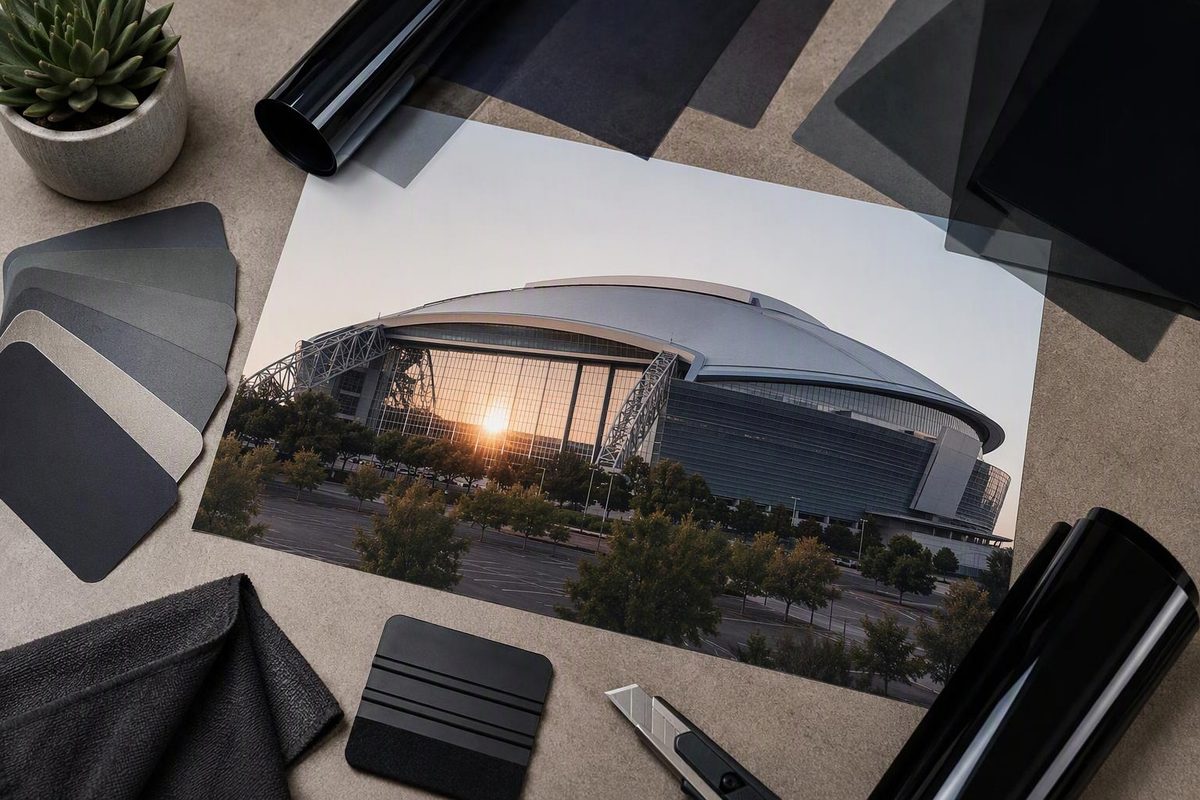
Window tint could reduce AT&T Stadium’s sun glare, but considering film is not the same as installing a permanent fix. August and September 2026 reports describe temporary tinting and curtains during the World Cup. Jerry Jones subsequently expressed interest in tinting, then indicated that no window-tinting changes were planned for the Cowboys’ home opener. Those reports do not establish a completed, permanent solution for NFL games. (Dallas Express, ClutchPoints)
For a tint buyer, the useful distinction is this: rejecting heat and reducing the brightness of direct sunlight are different performance goals.
What Jones said—and what remains unconfirmed
AT&T Stadium in Arlington has an east–west orientation, allowing afternoon sunlight through its west-facing end-zone glass. The visibility problem is not merely theoretical: after a November 2024 game against Philadelphia, CeeDee Lamb said he could not see a pass because of the sun. (KRLD)
The 2026 reports describe two distinct stages:
- August: Jones said, “We’re giving that a thought,” after seeing the World Cup tinting. He also cautioned that the sun’s angle differs between summer and fall. (Field Level Media, August 2)
- September: Asked about tinting for the home opener, Jones said he did not know of plans to “surprise our fans.” The September 18 report indicates no planned change for that game—not a permanent commitment never to tint the glass. (ClutchPoints)
The World Cup treatment also should not be described as proof that tint alone solved the problem. Reporting describes both temporary tint and black curtains, with curtains used for at least one match. Those accounts do not isolate each treatment’s contribution or establish film-only performance under fall football conditions. (KRLD)
Why high heat rejection does not guarantee a glare fix
Visible light transmission, or VLT, describes how much visible light passes through the tested film-and-glass combination. Glare reduction and total solar energy rejected are separate specifications; a strong result in one does not imply the same result in another.
For example, 3M’s April 2019 technical sheet for Prestige 70 Exterior lists these typical values over single-pane, quarter-inch clear glass:
| Specification | Published value |
|---|---|
| Visible light transmitted | 71% |
| Total solar energy rejected | 52% |
| Glare reduction | 19% |
This is a relatively clear film with a published 52% total solar energy rejection, yet only 19% glare reduction. The percentages describe different measures, not interchangeable ratings. They are not specifications for AT&T Stadium’s treatment, nor a recommendation for its glass. The same sheet shows different results on other glazing configurations. (3M technical data sheet, hosted by an installer)
That is why selecting a film simply because it is marketed as ceramic, premium or heat-rejecting would not answer the stadium’s visibility question.
What a credible permanent solution would need
For this application, the sensible next step would be an architectural-film assessment and an on-site trial—not choosing an automotive tint percentage. LLumar’s commercial guidance specifically calls for matching film to the building’s glass type, performance goals and aesthetic preferences. (LLumar)
A useful proposal should address:
- Field-level visibility: Test whether players can track the ball through the problematic sightlines during representative fall afternoon conditions.
- Daylight and appearance: Compare stronger visible-light reduction against the desire to retain natural light and views. Include interior and exterior reflectivity, not darkness alone.
- Glass compatibility and installation: Obtain manufacturer approval for the actual glazing and proposed installation surface, plus written warranty terms.
- Film versus curtains: Evaluate film separately from curtains before attributing an improvement to either. If film leaves unacceptable direct-sun glare, a deployable shading option deserves a separate trial.
The same purchasing lesson applies to a sunny storefront or home office: ask for VLT, glare reduction and solar performance on your glass, then assess a sample where the problem occurs. A film that makes the space cooler may still leave the view uncomfortably bright.