
Car Window Tint Normally Goes Inside—Even When It Is Shaped Outside
Car window tint normally goes inside, but is often cut and heat-shaped outside. Learn which side faces the glass and when exterior film is appropriate.
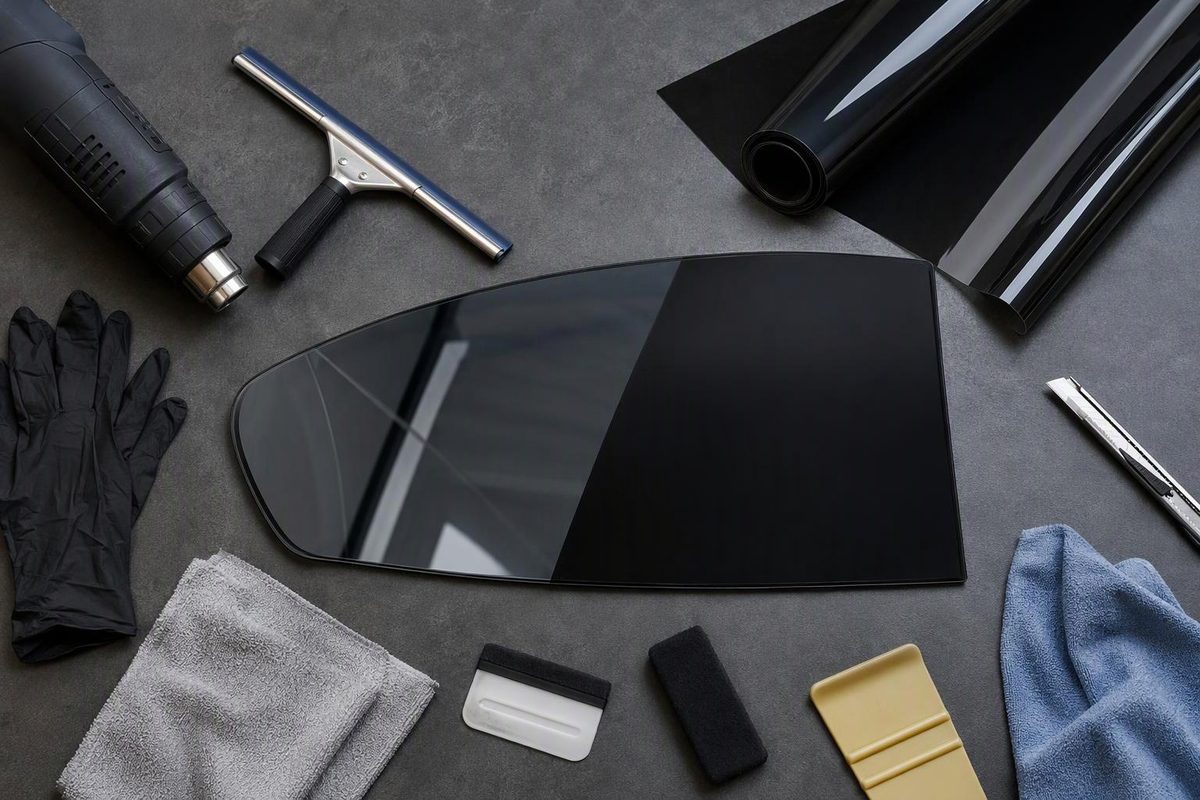
Car window tint normally goes on the inside of the glass—the side facing the cabin. The film’s adhesive bonds to that interior surface. If you see an installer laying film across the outside of a window, they are usually preparing it, not attaching it there permanently. LLumar confirms that automotive tint is typically applied to interior glass surfaces.
House and storefront windows need a slightly different answer: follow the exact film’s instructions. Interior-applied products and purpose-made exterior films both exist.
Why installers work on the outside first
The outside of a car window provides an accessible surface for sizing and shaping the film before installation inside the cabin.
For example, Gila’s automotive side-window instructions tell the installer to:
- Wet the outside glass and place the film on it, with the protective liner facing outward.
- Trim the film to fit the window.
- Remove the liner and wet the exposed adhesive with application solution.
- Move the film inside and place the wet adhesive against the wet interior glass.
On curved windows, the preparation can also include heat shrinking: shaping the film with controlled heat so it follows the glass’s curve. A window-film supplier’s installation guide describes cutting and heat-shaping on the outside before transferring the film inside.
So an installer using a heat gun outside your rear window is not, by itself, a sign that the tint is going on the wrong side. The important distinction is temporary shaping outside versus final bonding inside.
Which side of the film faces the glass?
For adhesive automotive tint, the adhesive side faces the inside glass. The clear release liner is a protective backing over the adhesive; it is removed, not left as part of the finished installation.
Do not choose the adhesive side by how dark or shiny it looks. Gila’s instructions describe using two pieces of transparent tape at a corner to separate the liner from the film. Follow your own product’s directions, especially if you have a non-adhesive or static-cling product.
A precut tint kit changes the sizing step, not the normal installation location. Check its instructions for any shaping still required.
Can ordinary car tint go on the outside?
Do not treat outside installation as an interchangeable option for standard automotive tint. Interior placement keeps the film away from direct exposure to road grime and weather. If someone proposes bonding film outside, ask for the exact product name and manufacturer instructions authorizing that application—not just an assurance that it will stick.
Exterior building film is a separate category. LLumar’s Vista exterior film, for example, has an outdoor-oriented coating designed to repel moisture and dirt and maintain UV stability.
What about home or storefront windows?
Check both the intended installation surface and the glass compatibility. Gila Privacy Control Mirror film, for example, specifies inside application and prohibits use on triple-pane windows.
Do not substitute leftover car tint for building film. LLumar discourages automotive film on architectural glass because its heat absorption can potentially cause glass breakage. For a building installation, the right question is not only “inside or outside?” but also “is this film approved for this glass?”