
Window Tint Does Not Stop License Plate Reader Cameras
Window tint changes visibility through glass, not the view of your exterior plate. Learn why dark and ceramic films do not prevent ALPR tracking.
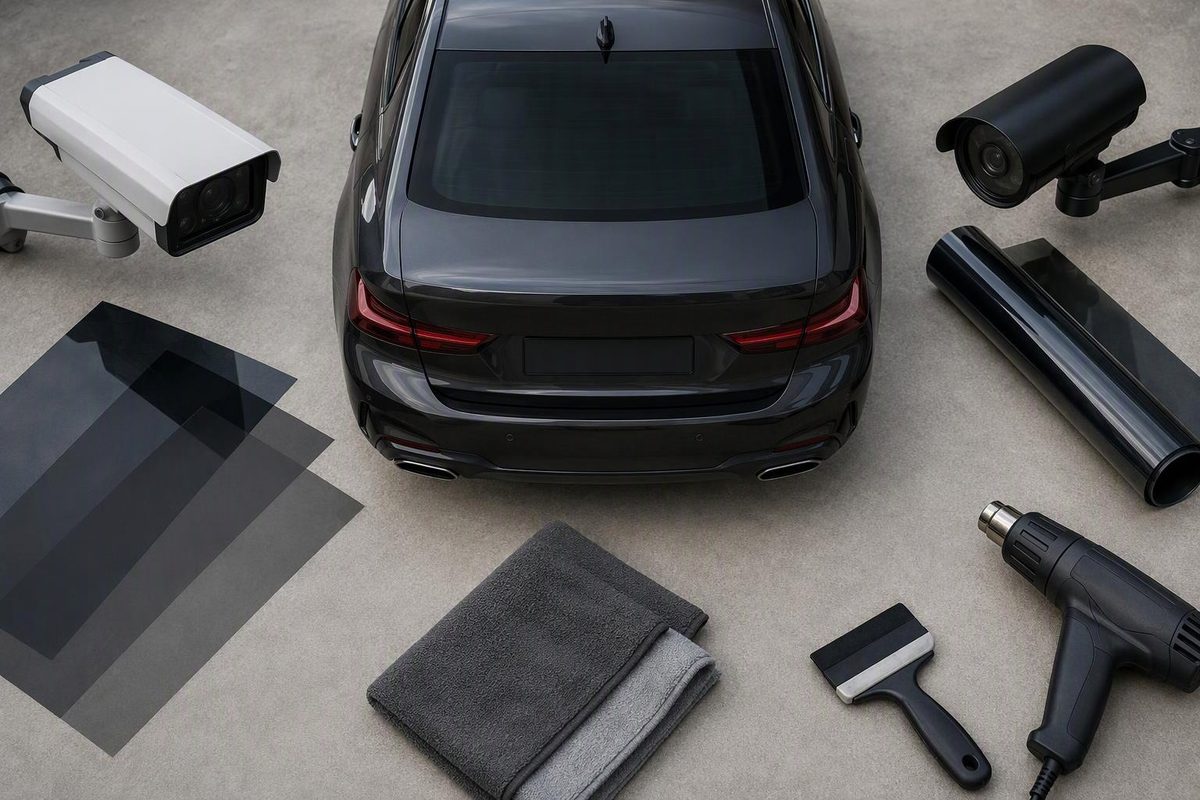
No—ordinary automotive window tint does not stop license plate reader cameras from reading an exterior license plate. The film covers your vehicle’s glass, not its plate. A roadside camera viewing the front or rear plate does not need to look through your tinted windows to read it.
That applies whether you choose dark dyed film, carbon tint or premium ceramic film. Tint can change visibility into the cabin; it is not a way to keep the vehicle out of a license plate reader database.
What the camera actually reads
Automated license plate readers, often abbreviated ALPR, capture vehicle images and use optical character recognition to convert plate characters into searchable text. Some systems use infrared cameras to help read plates at night or in poor lighting, according to Senstar’s explanation of ALPR technology.
The information can extend beyond the plate number. WBEZ’s August 2026 explainer describes searchable records containing a vehicle’s make, model, plate and location. The Forest View Police Department likewise explains that its readers capture plate images and help establish when and where a vehicle was observed.
The important distinction is cabin privacy versus vehicle identification. Making passengers or belongings harder to see through glass does not hide the exterior plate or erase a record of the vehicle passing a camera.
Why dark tint and ceramic infrared rejection do not help
Two tint specifications can cause confusion here:
- Visible light transmission (VLT) describes how much visible light passes through the tinted glass. Lower VLT means darker glass—not a less readable exterior plate.
- Infrared rejection describes a film’s performance against infrared energy at the glass. It is not a rating for defeating license plate cameras.
For example, 3M markets its Ceramic IR automotive film for infrared rejection and explicitly connects that performance to reducing the feeling of solar heat. That is a window-film comfort claim, not an ALPR-blocking claim.
Even if a film reduces infrared transmission through a window, the plate-reading camera’s view of an exterior plate does not pass through that window. Paying more for ceramic film therefore does not solve this particular privacy concern.
Nor should you treat dark tint as a guarantee against all camera images of occupants. Visibility through the glass depends on lighting and viewing conditions, and different camera systems have different purposes.
Window tint is not the same as a tinted plate cover
A cover, coating or film applied to the license plate is a different product with different legal implications. Legal window tint does not authorize plate obstruction.
For a concrete U.S. example, California Vehicle Code § 5201.1 prohibits operating a vehicle with a product that obscures, or is intended to obscure, plate recognition. It also prohibits altering a plate to avoid visual or electronic capture. The version effective January 1, 2026 specifies a $250 fine per violation upon conviction for operating with the prohibited device or making the prohibited alteration. Check your own state’s current plate-display rules rather than assuming an online “anti-camera” product is lawful.
What to choose tint for instead
Buy film for the result it can actually deliver: heat control, glare reduction, appearance and the degree of cabin privacy permitted by local law. Compare the exact film’s specifications, finished glass-and-film VLT, warranty and installation quality—not a promise to block surveillance cameras.
Our guide to choosing automotive window tint covers those purchasing trade-offs. If your concern is ALPR data collection, ask the local operator about its retention, sharing and access policies; changing window film does not address those policies.