
How Much Time to Allow for a Four-Door Tint Appointment
Allow approximately 2-4 hours for a typical professional full-car tint appointment; 2-3 hours is typical for a standard four-door sedan with no existing film or unusual glass.
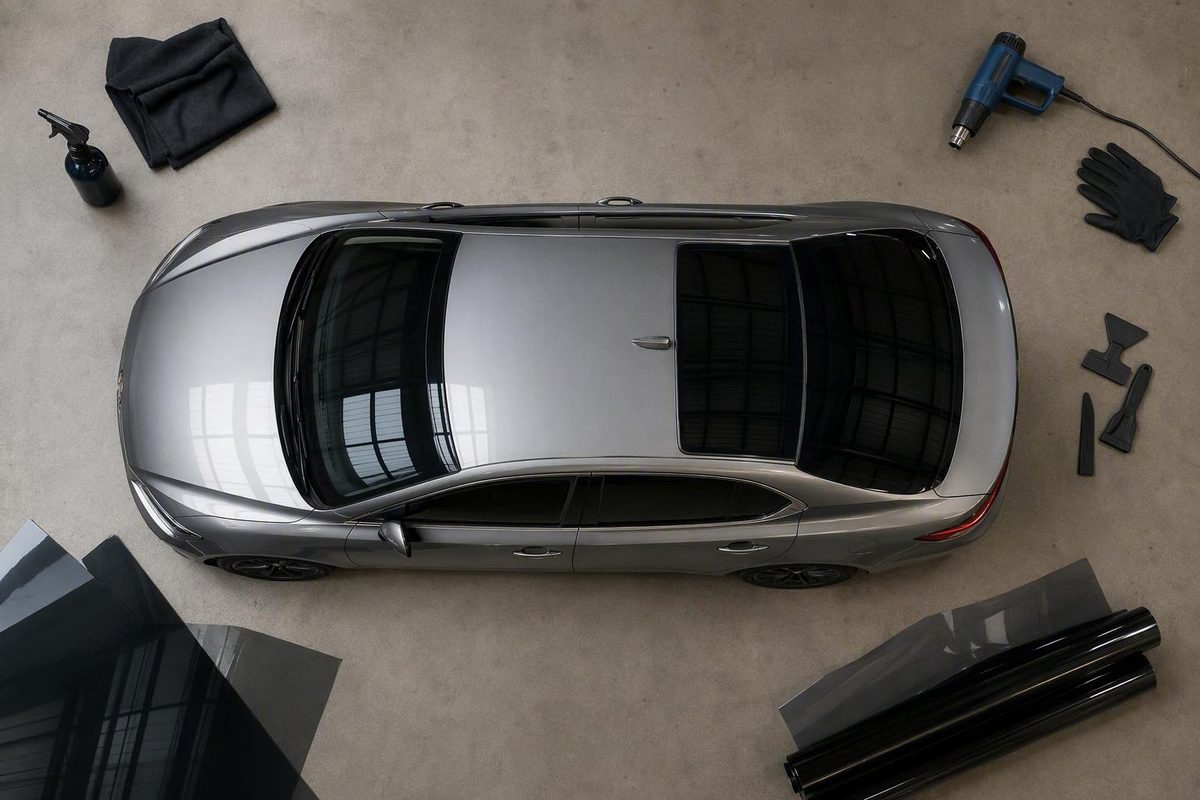
The short answer: allow about 2–4 hours
Allow approximately 2–4 hours for a typical professional full-car tint appointment. For a standard four-door sedan with no existing film or unusual glass, 2–3 hours is the most directly applicable vehicle-specific estimate: one provider assigns that range to a four-door sedan with four to six windows.1
Related: How Much to Tint Car Windows by Film Type.
Treat those figures as planning ranges, not promised pickup times. Pane count, glass shape, vehicle condition, and the number of technicians assigned can also change the turnaround.
An experienced installer may complete an uncomplicated sedan in about 1–3 hours. A sedan with unusually numerous, large, or complex windows may take 4–5 hours. Speed alone does not establish the installer’s experience or the quality of the finished work.2
A practical scheduling rule is:
- Straightforward sedan with bare glass: A morning or afternoon appointment may be enough.
- Scope or glass condition not yet confirmed: Reserve half a day.
- Old film, extra panes, or unusual glass: Plan to leave the car rather than wait.
- Firm deadline after the appointment: Disclose it before booking and request a vehicle-specific handoff estimate.
These ranges come largely from tint providers, industry publications, and installer reports rather than controlled timing studies. They are useful for scheduling, but they are not an independent industry standard or a guarantee that every four-door vehicle will take the same amount of time.
Define what the shop means by a full tint
For this article, a standard four-door tint job means:
- Four side-door windows
- The rear glass
That is a useful baseline, not a universal definition.
Before comparing quotes, confirm whether the package includes:
- Small fixed quarter windows beside the doors or rear glass
- A windshield sun strip
- The full windshield
- A sunroof
- A panoramic roof
- Additional fixed glass in a hatchback or unusually styled sedan
The number of doors does not necessarily equal the number of film pieces. A basic sedan may have four roll-down side windows and one rear window. Another four-door vehicle may add two or four fixed quarter panes, a large hatch glass, or roof glass. Each additional piece can require separate cleaning, patterning, positioning, trimming, and inspection.
The rear glass also deserves particular attention. Unlike a relatively flat side window, it may be strongly curved and require the film to be heat-shaped before installation. A quote that excludes the rear window—or includes the windshield or roof glass—is not directly comparable with the basic five-window assumption used here.
Use this checklist when booking:
- Exactly which panes are included?
- Are fixed quarter windows included or priced separately?
- Does the quoted time include cleaning and preparation?
- Does it include measuring or computer-cutting the patterns?
- Will the rear glass require heat shaping?
- Are touch-ups, final inspection, and customer handoff included?
- Are windshield or roof-glass services part of the same appointment?
Those answers are more useful than asking only how long it takes to tint a four-door car. The installer can give a better estimate once “four-door” has been translated into an exact pane count and service scope.
A practical timing table for common four-door tint jobs
The ranges below are scheduling guides. The cited providers use different definitions of preparation, installation, and total appointment time, so the figures should not be treated as guaranteed completion times.
| Job scenario | Useful planning range | Why the time may vary |
|---|---|---|
| Standard four-door sedan, four side windows plus rear glass, no existing film | About 2–3 hours1 | Pane count, cleaning, rear-glass shaping, fitting, and inspection can move the finish time |
| General full-car appointment when details are uncertain | Allow 2–4 hours2 | A safer allowance when package scope, glass condition, and shop workflow are unconfirmed |
| Uncomplicated sedan at an experienced, efficient shop | About 1–3 hours2 | Familiar glass, precut patterns, organized tools, and a practiced sequence may reduce fitting time |
| Two front-door windows only | About 30–45 minutes3 | Difficult seals, unusual glass, existing film, cleaning, and workflow can extend the job |
| Sedan with numerous, large, strongly curved, or complex panes | About 4–5 hours2 | More film pieces, restricted access, and extensive heat shaping add work |
| Removal of existing aftermarket tint | Add roughly 30 minutes to several hours; difficult removal may take up to half a day3 | Old film may release cleanly or leave stubborn adhesive |
| Beginner DIY full-car installation | About 4–6 or more hours; budget a full day4 | Workspace preparation, hand-cutting, contamination, creases, alignment errors, and rework can extend the project |
Tinting only the two front side-door windows is much faster than covering the full sedan because the installer handles fewer panes and normally avoids the large rear glass. Make sure “front windows” means the two front side-door windows, not the windshield.
A first-time home installer should not plan around professional turnaround times. The beginner estimate includes preparation and application, and a badly cut or creased piece may have to be discarded and replaced.
Do not mechanically add every upper limit in the table. A complex-window estimate may already account for extra fitting and shaping. Ask the shop for one total estimate after it knows the vehicle, exact panes, old-film condition, and requested extras.
What happens during the appointment
Tinting takes several hours because it is a sequence of preparation, fitting, application, and finishing—not simply placing a dark sheet over the glass. Automotive window film is applied to the inside surface of the glass.
A typical appointment proceeds in this order:
- Vehicle and glass inspection. The installer checks the windows, seals, existing film, contamination, damage, and access around the glass.
- Cleaning and preparation. Dirt, dust, residue, and other contaminants are removed from the installation surface.
- Measuring or pattern selection. The installer measures the windows, hand-cuts the film, or selects vehicle-specific patterns for a plotter.
- Film cutting and initial fitting. Each piece is prepared for its pane.
- Film positioning. The release liner is removed, installation solution is applied, and the film is positioned on the inside of the glass.
- Squeegeeing. The installer works out solution and air while setting the film against the glass.
- Heat shaping where necessary. Film is formed to match curved glass.
- Edge trimming and finishing. Edges are aligned or trimmed, and seals and corners are checked.
- Touch-ups and final inspection. The installer reviews alignment, contamination, edges, and other concerns before handoff.
One provider illustrates the process as 15–30 minutes for preparation, 30–60 minutes for film customization, and 1–3 hours for application.5 Those stages are listed separately, while other providers combine them into one total appointment estimate. Do not add or compare the figures without first asking what each shop includes.
Curved glass creates one of the clearest differences between a simple and difficult job. Film intended for compound-curved rear glass must be heat-shaped—often called “shrinking”—so the flat sheet conforms to the window without fingers or creases. A large rear window may consequently require more fitting and care than a single side window.
A plotter does not eliminate glass inspection, cleaning, film handling, heat shaping, application, edge finishing, or quality checks, however. Its use does not guarantee a one-hour appointment.
When comparing turnaround quotes, make sure the jobs are comparable. One shop’s “installation time” may begin after cleaning and pattern preparation, while another shop’s estimate may run from key handoff through final inspection. Faster is not automatically better, and slower is not automatically more careful.
What can make a four-door car take longer
A quote above the typical range does not automatically indicate a problem. The installer may have identified extra panes, difficult access, old adhesive, or a workflow in which one technician completes the entire vehicle.
Vehicle factors
- More panes than a basic sedan
- Large side or rear windows
- Fixed quarter glass
- Frameless door windows
- Difficult seals or tight interior trim
- Sunroof or panoramic-roof glass
- A hatchback or fastback design with expansive rear glass
A four-door label can hide major differences. A compact sedan with five panes in the package is not the same job as a four-door fastback with quarter windows and a deeply curved rear window.
Glass factors
- Strong or compound curvature
- A rear window requiring extensive heat shaping
- Defroster lines that call for extra care
- Restricted access near trim or the rear deck
- Unusual edges or shapes
Window count and curvature are among the clearest reasons a routine sedan can move from a relatively short appointment toward the longer end of the planning range.
Existing-condition factors
- Dirt or contamination around seals
- Adhesive residue
- Existing aftermarket tint
- Peeling, bubbling, or brittle film
- Damaged glass or seals
- Glass treatments that interfere with preparation
Arriving with a reasonably clean car can reduce avoidable work, but it does not replace the installer’s final glass preparation.
Film factors
Different films may handle differently, and a shop may use a particular technique for the selected product. The available evidence does not establish a universal number of extra minutes for ceramic, carbon, dyed, or metallic film. If product choice changes the schedule, ask the installer how and whether that difference is already included.
Shop and installer factors
- Installer experience
- One technician versus a team
- Familiarity with the vehicle
- Hand-cut versus precut patterns
- Tool and workspace organization
- A repeatable installation sequence
- Time allocated for touch-ups and inspection
- The shop’s appointment load and working pace
A single technician must complete the full sequence. Installer forum reports describe substantial improvements in turnaround as technicians gain experience and organize their tools, but those reports are anecdotal and do not control for vehicle type, package scope, preparation, or finish standards.6
A quick estimate is neither automatically impressive nor automatically suspicious. Compare what is included: glass preparation, contamination control, rear-glass shaping, edge finish, touch-ups, inspection, aftercare, and warranty. Disclose old tint, damaged seals, adhesive, unusual window designs, and glass treatments before the estimate is finalized.
How much time old-tint removal can add
A normal installation estimate often assumes clean, bare glass. Removing film and preparing the underlying surface can change both the price and the pickup time.
Published estimates vary widely. Glass Tint USA says old aftermarket film can add about 30 minutes to half a day, while a later answer on the same page gives a narrower 1–2-hour estimate.3 That variation—even within one provider’s guidance—shows why one fixed allowance would be misleading.
The condition of the existing film is crucial. Film that releases cleanly presents a different job from aged, peeling, layered, or brittle film that leaves adhesive behind. After removal, the installer must still clean and prepare every affected pane before applying replacement film.
When requesting a quote, tell the shop:
- Whether all windows or only some have old film
- Whether it is peeling, bubbling, discolored, or layered
- Whether adhesive is visible
- Whether the rear glass is tinted
- Whether the existing appearance comes from aftermarket film rather than factory-tinted glass
Ask for an updated estimate after inspection instead of relying entirely on a phone quote that assumed bare glass.
As a conservative scheduling decision, plan to leave the vehicle for at least half a day when removal is involved unless the shop gives a more precise handoff time. Stubborn removal can consume much of that window before installation of the new film begins.
Installation time is not curing time
There are three separate milestones:
- Hands-on installation completion: The installer has finished applying, trimming, and inspecting the film.
- Vehicle handoff: The shop returns the car and provides aftercare instructions.
- Full adhesive curing: Remaining moisture evaporates and the adhesive continues to settle.
The first two normally occur on appointment day. The third continues for days afterward.
Ceramic Pro describes a typical curing period of about 2–5 days, potentially extending to two weeks in cooler climates.5 Turbo Tint North OKC gives a similar weather-dependent distinction: about 2–4 days in warm conditions and as much as 1–2 weeks in cooler or humid weather.7 Temperature, humidity, film, and vehicle conditions prevent one universal cure date.
Mild haze, retained moisture, or small bubble-like areas may be visible during early curing. Do not use a general article to decide that a persistent mark is normal or defective. Follow the installer’s stated timeline and contact the shop if an area does not improve, appears to be lifting, or differs from what the installer told you to expect.
Keeping newly tinted windows rolled up for approximately 3–5 days is a commonly published precaution.5 Some shops specify a shorter period, so the installer’s and film manufacturer’s instructions should control.
Some provider guidance also recommends waiting about one week before cleaning the film-facing interior surface.5 Treat that as a planning reference only when it matches the instructions supplied with your installation. Once cleaning is permitted, use the cleaner and cloth recommended for the film rather than treating it like bare glass.
The essential scheduling point is that same-day pickup does not mean full curing. Ask two separate questions:
- When can I pick up the car?
- When will the film be fully cured, and what restrictions apply before then?
How to prepare, schedule, and compare installers
A little preparation can prevent avoidable delays, although the installer must still perform the final glass preparation.
Before the appointment:
- Remove phone mounts, toll tags, cameras, shades, stickers, or other accessories attached to windows being tinted, unless the shop asks you to leave them in place.
- Clear loose belongings away from the doors, rear seat, parcel shelf, and rear glass.
- Disclose existing film and adhesive.
- Tell the shop about damaged seals or glass.
- Mention hydrophobic or water-repellent glass treatments.
- Arrive with a reasonably clean, uncluttered vehicle.
- Choose the desired film and shade, or reserve time for a consultation.
Rapid Window Tinting specifically advises removing window-mounted accessories and disclosing or avoiding hydrophobic treatments before tint work. Its guidance also makes clear that the professional installer still performs the necessary surface preparation.8
Do not assume product selection is included in the quoted installation window. If you need to compare films, inspect shades, or discuss legal limits, ask whether you should arrive early. Readers still comparing product tiers can review this overview of car-window-tint prices by film type.
Confirm these items in writing when possible:
- Exact panes included
- Film product and shade
- Whether old-film removal is included
- Estimated vehicle handoff time
- What happens if inspection reveals additional preparation
- Window-operation and cleaning restrictions
- Written product and workmanship warranty
- Procedure for reporting a post-installation concern
Do not automatically choose the shop quoting the shortest time. Compare coverage, preparation standards, pattern and edge work, contamination control, rear-glass technique, inspection, aftercare, and warranty. A one-hour quote and a three-hour quote may describe different packages or workflows.
The site explains its background and sourcing approach on its About Window Tint Central page.
Finally, check current law before selecting the shade. Tint limits vary by state and can change. Verify the current requirements with the relevant motor-vehicle authority before installation, as stated in Window Tint Central’s legal notice.
For practical planning, reserve 2–4 hours for a professional four-door tint, with 2–3 hours as a sensible expectation for an uncomplicated sedan.1 Confirm the included panes and disclose old film or unusual glass before booking. The shop may complete the installation the same day, but curing continues afterward; follow the installer’s film-specific aftercare instructions.
Frequently asked questions
Can a four-door car be tinted in one hour?
It is possible in some circumstances, but it should not be the default expectation. Experienced installers report completing some vehicles in approximately an hour or less, although those reports do not consistently define the vehicle, pane count, preparation, staffing, or inspection process.6
For scheduling, 2–4 hours remains the safer allowance, with 2–3 hours reasonable for a standard, uncomplicated sedan.1 If a shop quotes one hour, ask which panes are included, whether cleaning and final inspection fit within that time, and whether multiple technicians will work on the car.
How long does it take to tint only the two front-door windows?
A straightforward pair of front side-door windows usually takes about 30–45 minutes.3 Difficult seals, unusual glass, old film, contamination, or shop workflow can extend the appointment.
Confirm that “two front windows” means the two front side-door windows rather than the windshield, which is a separate pane and service.
Does the 2–4 hour estimate include removing old tint?
Usually, assume it does not unless the shop says otherwise. The standard appointment range generally describes applying new film to prepared glass.
Removal can add about 30 minutes to several hours, and difficult film or adhesive can extend the work to half a day.3 Tell the shop how many panes have existing film and request a revised handoff estimate after inspection.
How long should I wait before rolling down newly tinted windows?
A commonly published precaution is approximately 3–5 days, but there is no universal interval for every film, installation, and climate.5
Follow the installer’s and film manufacturer’s instructions first. If you forget the stated interval, contact the shop instead of relying on a generic deadline.
How long would it take a beginner to tint a four-door car at home?
Budget at least 4–6 hours and preferably a full day.4 A beginner must prepare the workspace and glass, measure and cut several patterns, shape film for curved glass, position each piece, remove solution and air, and finish the edges. Creases, contamination, poor alignment, or an incorrectly cut piece can force a restart.
The adhesive will still need time to cure after the hands-on DIY work is complete. Installation and curing remain separate timelines, just as they are with professional tinting.
-
Nice Tintz Memphis, “How Long Does Window Tinting Take? – A Detailed Guide,” https://nicetintzmemphis.com/uncategorized/how-long-does-window-tinting-take. Accessed August 27, 2026. ↩↩↩↩
-
Tint Wiz, “How Long Does It Take To Tint A Car?,” https://tintwiz.com/window-tinting/how-long-does-it-take-to-tint-a-car. Accessed August 27, 2026. ↩↩↩↩
-
Glass Tint USA, “How Long Does Vehicle Tinting Take?,” https://www.glasstintusa.com/faq/how-long-does-it-take-to-tint-my-vehicle. Accessed August 27, 2026. ↩↩↩↩↩
-
Auto Sound Security, “DIY vs Pro: Time for Window Tinting,” https://autosoundnyc.com/2026/03/14/diy-vs-pro-time-for-window-tinting. Accessed August 27, 2026. ↩↩
-
Ceramic Pro, “How Long Does It Take to Tint Car Windows, and What to Expect?,” https://ceramicpro.com/how-long-does-it-take-to-tint-car-windows-and-what-to-expect. Accessed August 27, 2026. ↩↩↩↩↩
-
TintDude Window Tinting Forum, “Average Time It Takes You to Tint a Vehicle?,” https://tintdude.com/forums/topic/90656-average-time-it-takes-you-to-tint-a-vehicle. Accessed August 27, 2026. ↩↩
-
Turbo Tint North OKC, “How Long Does It Take to Tint Car Windows?,” https://northokc.turbotint.com/blogs/in-the-news-turbo-tint-north-okc/how-long-does-it-take-to-tint-car-windows. Accessed August 27, 2026. ↩
-
Rapid Window Tinting, “How to Prepare Your Car for Window Tint, PPF, or Ceramic Coating in Los Angeles,” https://www.rapidwindowtinting.com/post/how-to-prepare-your-car-for-window-tint-ppf-or-ceramic-coating-in-los-angeles-the-complete-pre-a. Accessed August 27, 2026. ↩