
Idaho’s Legal Tint Limits Differ for Rear Side Windows and Back Glass
Check Idaho’s 35% front-side and rear-window limits, 20% rear-side rule, windshield restrictions, tolerances and medical exceptions before tinting.
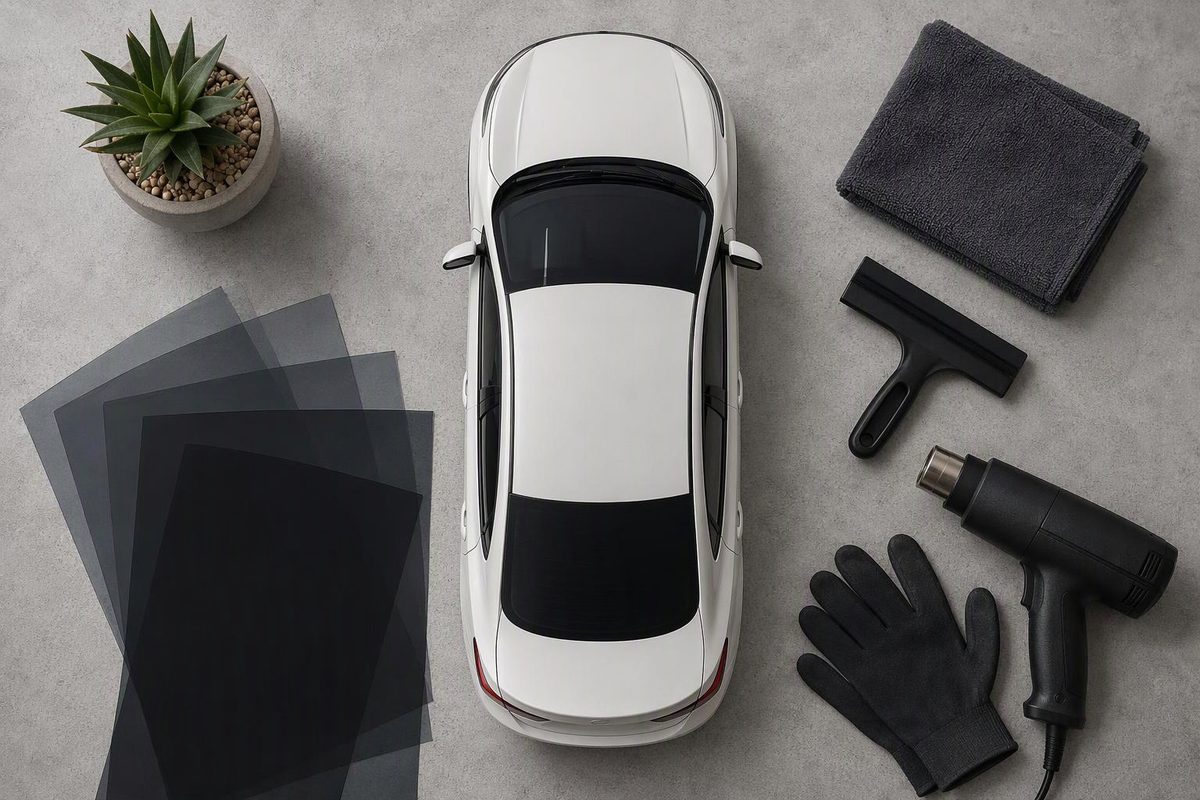
Idaho’s ordinary aftermarket tint limits are 35% light transmission on the front side windows and rear window, and 20% on the rear side windows. The back glass does not share the darker rear-side limit. Windshield film is generally restricted to a nonreflective upper strip. These rules come from Idaho Code § 49-944.
Reviewed October 24, 2026. General information, not legal advice; verify current requirements with Idaho State Police or the Idaho DMV before installation.
Idaho tint limits by window
VLT means visible light transmission: a higher percentage lets more light through, while a lower percentage is darker.
| Window position | Ordinary aftermarket film/device rule |
|---|---|
| Windshield | Nonreflective film above the AS-1 line; if no AS-1 line is identifiable, an upper strip extending six inches down from the top of the windshield |
| Front side windows immediately beside the driver | At least 35% light transmission |
| Front side vents | At least 35% light transmission |
| Rear side windows behind the driver | At least 20% light transmission |
| Rear window/back glass | At least 35% light transmission |
The statute provides a ±3-percentage-point tolerance for the side- and rear-window light-transmission limits. It calls for nonreflective film and also sets maximum outward luminous reflectance at 35%, with a ±3-point tolerance. Reflectance is separate from VLT: one measures light reflected outward; the other measures light passing through. Source: § 49-944(1).
Treat the tolerance as a margin, not a reason to order darker film. Specify the stated 35% or 20% limit rather than targeting its lowest tolerated edge.
Can you use 20% or 5% tint?
Under the ordinary rules, 20% is the minimum for rear side windows—not the front doors or back glass. Aftermarket 5% “limo” tint falls below the ordinary minimums for all those windows. Medical and original-equipment provisions are separate exceptions, not a general permission to install any darkness. Source: § 49-944.
Do SUVs and pickups have different limits?
Section 49-944 does not create a separate unrestricted-rear-window category for SUVs, vans or pickups. Its ordinary aftermarket rules apply to “any motor vehicle.”
However, subsection (5) protects qualifying glazing and treatments supplied when the vehicle was new, or available as compliant standard or optional manufacturer/dealer equipment. That distinction matters when an SUV or pickup already has dark factory privacy glass. Factory glass and film added later are not interchangeable legal categories; do not assume the original-equipment provision also authorizes another dark layer. Source: § 49-944(1), (5).
A “35% film” label is not a finished-window reading
Idaho’s statute describes its percentages as properties of the film or sunscreening device; it does not expressly call them “net” glass-plus-film limits. Have the installer confirm Idaho’s measurement requirements rather than assuming either a shade label or a finished reading alone settles compliance. Source: § 49-944(1).
The physical distinction still matters. The International Window Film Association’s automotive guide explains that automotive glass affects combined VLT and recommends using a light meter to check film on glass.
For illustration, assuming glass transmits 75% and the film itself transmits 35%:
Estimated finished VLT = 0.75 × 0.35 × 100 = 26.25%.
With 50% film on that same hypothetical glass, the estimate is 37.5%. These calculations are estimates, not a substitute for measurement; check whether a manufacturer’s published figure describes film alone or film tested on glass.
As a conservative purchasing target, request finished readings at or above the stated 35%/20%/35% limits, alongside confirmation that the film meets Idaho’s requirements. Our 35 percent tint guide explains the film-versus-finished-VLT distinction further.
Medical tint exceptions
Idaho permits qualifying medical tint when the vehicle’s operator or passenger has written verification from a licensed physician that protection from sunlight or heat is medically necessary in connection with past or current treatment. That verification must be carried in the vehicle.
The exception allows nonreflective film with:
- At least 70% light transmission on the front windshield, ±3 points.
- At least 20% on the other windows, ±3 points.
- No more than 35% luminous reflectance, ±3 points.
A medical need does not authorize unlimited darkness. Source: § 49-944(4).
Before you approve the installation
Have the quote identify the film, shade and intended result for each window, including the back glass separately from the rear sides. Ask the shop to locate the windshield’s AS-1 line before cutting a strip, document meter readings, and explain how any existing factory privacy glass affects the job.
If you are buying a used vehicle with existing tint, have it checked before relying on the seller’s claim that it is legal. Idaho prohibits operating on public highways, selling or offering to sell a vehicle with noncompliant windows; a violation is an infraction. Source: § 49-944(2), (6).