
Which Windows Can Have Dark Tint in Hawaii
See Hawaii’s front-window VLT standard, rear-window exemptions, windshield rules, installer certificates, fines and traffic-stop duties under Act 129.
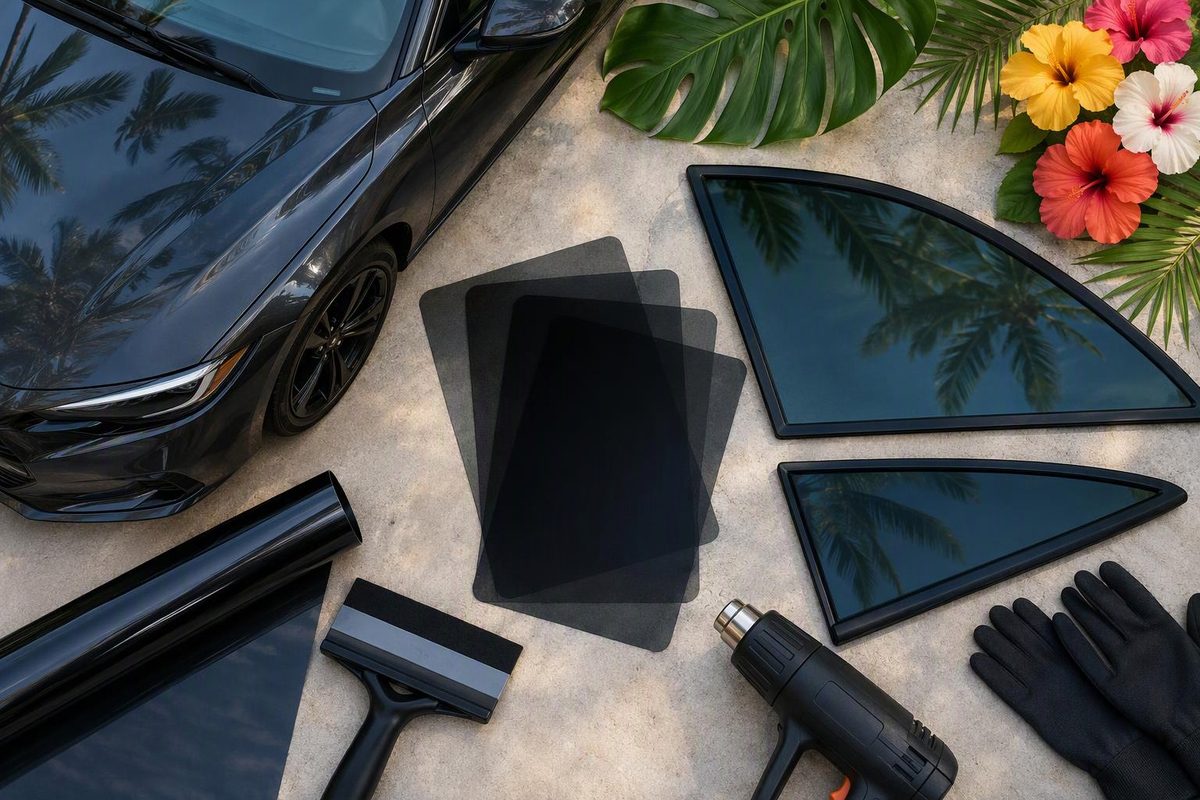
Hawaii’s front side windows must meet a 35% visible light transmission (VLT) standard, with a statutory tolerance of plus or minus six percentage points. The rule applies to the finished glass-and-film combination, not the shade printed on the film box. Qualifying rear windows can be darker when the vehicle has rearview mirrors on both sides; that exemption now includes sedans. Finished VLT of 20% or 5% is not legal on the front side windows. Hawaii Revised Statutes §291-21.5
Act 129, effective May 29, 2025, expanded rear-window exemptions, raised fines and added a requirement to roll down tinted windows during traffic stops. It did not lower the front-window standard to 20%. The legislature’s enactment record and final bill text establish the approval date and immediate effective date.
Choose a window; for rear glass, also select the vehicle type and mirror setup.
Check the Rule for Your Window
35% Finished VLT Standard
Front side windows must meet the 35% VLT standard, with a statutory tolerance of plus or minus six percentage points. Measure the glass and film together.
20% and 5% finished VLT are below the front-window standard. Do not use the tolerance as an installation target.
Source: Hawaii Revised Statutes §291-21.5(e)(6)–(11), including Act 129’s rear-window changes. A rear VLT exemption does not settle reflective-finish restrictions.
Hawaii Tint Limits Depend on the Window
| Window | Current Hawaii Rule |
|---|---|
| Front driver and passenger side windows, including qualifying wing vents/windows | Finished glass plus film: at least 35% VLT, plus or minus six percentage points. |
| Rear side windows behind the driver | Exempt on sedans, vans, minivans, trucks and buses when rearview mirrors are fitted on both sides. |
| Rear windshield | Exempt on sedans, vans, minivans, trucks, buses and other motor vehicles when rearview mirrors are fitted on both sides. |
| Windshield top strip | Transparent film must not encroach into the AS-1 portion. Without an AS-1 marking, the strip may extend no more than four inches below the top, measured from the middle of the bottom edge of the upper windshield moulding. |
| Other windshield film | Transparent material applied to the AS-1 portion must meet Federal Motor Vehicle Safety Standard 205. This is not unrestricted permission for dark full-windshield film. |
These rules come from §291-21.5(e)(6)–(11).
For an SUV or another vehicle whose classification is unclear, confirm the rear-side-window exemption with Hawaii vehicle-inspection authorities before installation. The rear-side list does not expressly name SUVs or include the rear-windshield provision’s broader “other motor vehicles” wording. A rear-windshield exemption does not automatically establish a rear-side exemption.
Darker shades, including 20% or 5%, may be used on qualifying exempt rear windows. The exemption depends on the window, vehicle classification and mirrors—not simply on the glass being behind the driver.
“35% Film” Can Produce an Illegal Front Window
VLT is the percentage of visible light passing through a window; a lower number means a darker window. Hawaii measures the combination of film and existing glass.
For a rough estimate, finished VLT ≈ glass VLT × film-only VLT, using decimals. Assuming 80% glass:
| Film-Only VLT | Calculation | Estimated Finished VLT |
|---|---|---|
| 35% | 0.80 × 0.35 | ~28% |
| 50% | 0.80 × 0.50 | ~40% |
This glass-and-film calculation is an estimate, not a compliance test. The 28% example falls below 29%, the lower threshold implied by the statutory tolerance.
Check what the film’s specifications measure before multiplying. Some published VLT figures already include test glass. For example, 3M’s Color Stable technical sheet reports different finished VLT values on 73% automotive glass and 89% clear glass. Do not multiply a glass-inclusive figure by your glass VLT again.
Do not use the six-point tolerance as your installation target. Ask the shop to measure the existing glass, select film for the required finished VLT and verify the completed front windows with a tint meter. Our 35% tint guide explains advertised shade versus the result on your vehicle.
Reflective Finishes and Medical Notes Do Not Override the Rules
Hawaii’s statute prohibits sun-screening devices with mirrored or highly reflective finishes that appear red, yellow, amber or blue from outside. It does not express this prohibition as a numerical reflectance cap. A “ceramic” or “chameleon” product label does not establish compliance. §291-21.5(b)
For exempt rear windows, choose a conventional nonreflective film or confirm any decorative finish with Hawaii inspection authorities before purchase. Permission for darker glass does not settle every finish question.
The current statute contains no medical exemption authorizing darker tint. HB368 proposed an exemption for medical light sensitivity, but its official record shows no enacted act. A proposed bill or a physician’s note is not permission to exceed the current limits. HB368 status
Keep the Installer’s Certificate in the Vehicle
Hawaii’s required vehicle safety inspection includes a test of glass-and-film compliance. The installer must issue a certificate confirming that the installed device complies with the law, and you must keep that certificate in the vehicle.
Keep the receipt too: it can establish the installer’s identity if a citation is issued. Before paying for installation, get a quote identifying each window, the intended finished VLT and the compliance certificate.
| Responsible Party | Fine per Separate Offense | Additional Installer Obligation |
|---|---|---|
| Vehicle owner | $300–$550 | — |
| Installer | $700–$1,200 | Compliant reinstallation at no charge, or reimbursement for compliant installation by another installer. |
Failure to issue the certificate is itself a violation. Its absence from the vehicle at citation is evidence of installer noncompliance. Illegal film is also subject to removal. §291-21.5(b), (c) and (f)
Fully Lower Tinted Windows During a Traffic Stop
Drivers and passengers in vehicles with applied tint must fully roll down their windows when stopped by a law enforcement officer. There are exceptions for physical disability or mechanical failure, provided the driver communicates or cooperates through other reasonably available means. Failure to comply may be cited as a noncriminal traffic infraction. §291-21.5(d)
For heat control, compare film performance separately from darkness; our automotive film guide covers that choice. Verify current requirements with Hawaii transportation or vehicle-inspection authorities before installation. This guide is general information, not legal advice.