
Alabama Tint Law: Legal VLT by Window and Vehicle Type
Alabama generally requires 32% finished VLT and no more than 20% reflectance, while qualifying SUVs and vans may use darker rear glazing.
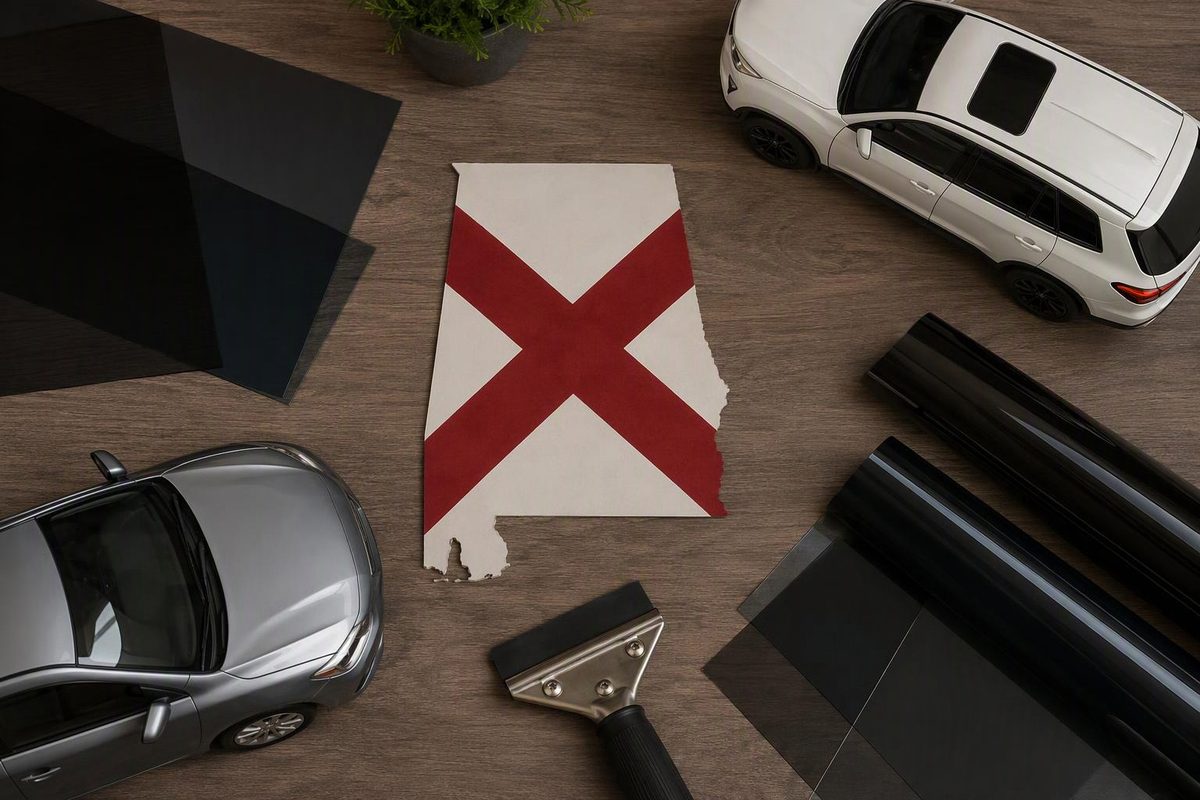
For vehicles registered in Alabama, window tint generally must provide at least 32% visible light transmission (VLT), with a 3% measurement tolerance, and reflect no more than 20% of light. Which rear windows must meet those limits depends on whether the manufacturer classifies the vehicle as a passenger car or as a multipurpose passenger or recreational vehicle.
The following limits reflect Alabama Law Enforcement Agency (ALEA) guidance and the law reviewed on September 30, 2026.
| Window | Passenger car or station wagon | Multipurpose passenger or recreational vehicle |
|---|---|---|
| Windshield | Transparent strip on the uppermost 6 inches only | Same |
| Front side windows | At least 32% VLT; no more than 20% reflectance | At least 32% VLT; no more than 20% reflectance |
| Rear side windows | At least 32% VLT; no more than 20% reflectance | Darker tint may be permitted behind the driver as allowed for that vehicle under federal law |
| Rear window | At least 32% VLT; no more than 20% reflectance | Darker tint may be permitted behind the driver as allowed for that vehicle under federal law |
| Mirrors | No additional tint-specific mirror requirement in ALEA’s summary | Outside rearview mirror required on each side when darker rear tint is used |
ALEA’s official tint summary says the manufacturer determines the vehicle classification. Do not assume every hatchback, crossover or work van receives the multipurpose-vehicle rear-window treatment; verify its classification before ordering film.
The statute also contains exceptions, including for vehicles not registered in Alabama and qualifying personal vehicles belonging to active or retired law-enforcement officers. The latter exception requires the officer to occupy the vehicle and carry law-enforcement identification (Sections 32-5C-2 and 32-5C-3).
The 32% rule applies to the finished window
Alabama regulates how much light passes through the glass and applied material together, not merely the VLT printed on the film box. The Alabama Administrative Code rule applies the 32% limit after the material and glazing are combined.
A useful estimate is:
glass VLT × film VLT = estimated finished VLT
For example, 75% factory glass with 43% film produces an estimated finished VLT of:
0.75 × 0.43 = 0.3225, or 32.25%
Nominal 32% film on that same glass would finish near 24%, below the standard. Because actual glass and film may differ from their nominal ratings, have the installer meter the untreated glass and then the completed window. Our 35% tint guide explains this compounding effect in more detail.
The 3% tolerance is not a separate 29% specification for consumers. Section 32-5C-2 states a 32% standard with a measurement tolerance of at least 3%. It also says light transmission must be measured with a capable instrument before a person may be charged, and the officer must have the meter before stopping the driver. Treat the tolerance as allowance for measurement variation, not a target below 32%.
Windshield tint is limited to the top six inches
Alabama permits a transparent item on the uppermost six inches of the windshield, provided it is not red or amber. The general rule otherwise prohibits applied material or glazing that reduces windshield light transmission (Section 32-5C-3).
A very light or nearly clear full-windshield film therefore should not be treated as automatically legal merely because it is marketed for heat rejection. If windshield heat control is the goal, compare the legal strip and other options in our front windshield tint guide, then confirm the planned installation with ALEA.
Sedan rules differ from SUV, van and recreational-vehicle rules
For a passenger car or station wagon, ALEA applies the 32% VLT and 20% reflectance limits to all side windows and the rear window.
For a multipurpose passenger or recreational vehicle, the windshield and front-seat windows follow the same limits. Windows behind the driver may use darker tint where allowed for that manufacturer-classified vehicle under federal law. ALEA requires an outside rearview mirror on each side when this darker rear tint is used.
This is why both “32% on every window” and “any darkness in back” can be incomplete. Ask the installer to identify the vehicle classification and list the intended finished VLT for each window on the quote.
Compliance labels and installation checks
A vehicle with applied window material must display a compliance label visible from outside. ALEA says the label must be affixed by a tinting dealer, while Section 32-5C-6 prohibits installing material that would violate the transmission or reflectance limits.
Before accepting the job, ask the shop to:
- meter the original front side glass;
- state the film’s exact product line and nominal VLT;
- estimate the finished glass-and-film VLT;
- confirm reflectance will not exceed 20%;
- identify the manufacturer’s vehicle classification if darker rear film is proposed;
- meter the completed regulated windows; and
- install the required Alabama compliance label.
Film chemistry does not change the legal darkness limit. Dyed, carbon and ceramic films can all be legal or illegal depending on the finished reading. Choose heat performance separately from darkness; the automotive tint selection guide explains the other specifications worth comparing.
Medical exemptions require an ALEA application
A medical need does not by itself authorize darker tint. ALEA may issue an exemption to a person who needs shielding from direct sunlight for medical reasons. The application must include a written statement from a physician licensed in Alabama, and ALEA may impose conditions and limitations. An approved person receives a uniquely numbered windshield decal (Section 32-5C-4).
ALEA’s tint page lists its Driver License Division Medical Records Unit at 334-676-7396 for waiver details. Obtain the exemption and understand its conditions before installing film that would otherwise be noncompliant.
Penalties increase for repeat convictions
Under the 2025 compilation of Section 32-5C-7, a violation is a misdemeanor. A first conviction carries a fine of up to $100, imprisonment for up to 10 days, or both. Maximum penalties increase for specified repeat offenses committed within one year of the first offense.
For a lower-risk installation, specify a measured result of at least 32% rather than aiming into the tolerance, avoid full-windshield film without an applicable exemption, and make sure the dealer supplies the compliance label. Recheck ALEA’s current guidance before installation because rules and agency procedures can change.