
Kansas Tint Law: Measure the Finished Window, Not Just the Film
Check Kansas’s 35% finished-VLT rule, windshield restrictions, medical-film exception and stricter commercial-vehicle limits before choosing tint.
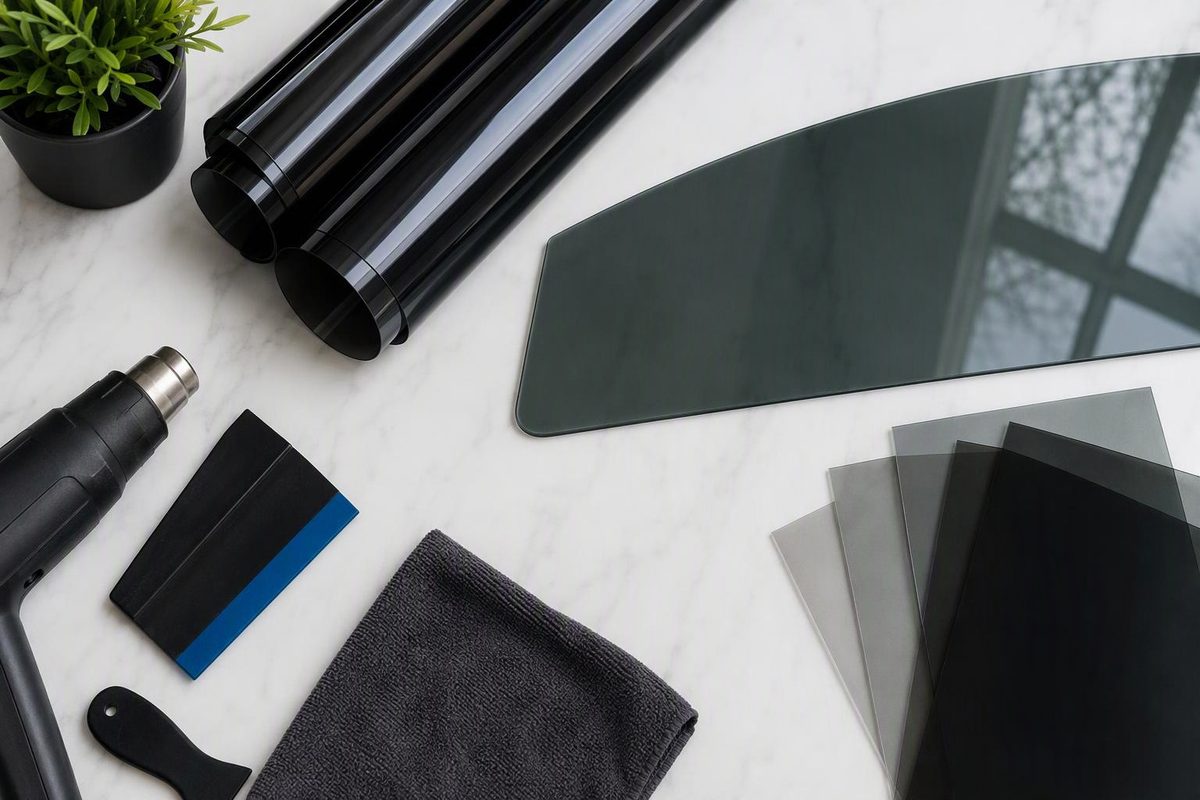
Kansas generally requires tinted side and rear windows to transmit at least 35% of light through the finished glass-and-film combination. Ordinary windshield tint is limited to a nonreflective strip above the marked AS1 line. Choosing film labeled “35%” does not necessarily produce a legal window. These rules apply to vehicles required to be registered in Kansas and operated on its highways. K.S.A. 8-1749a
Reviewed October 4, 2026. General information, not legal advice; verify current requirements with Kansas Highway Patrol or the state motor-vehicle agency before installation.
Kansas tint limits by window
The following covers ordinary aftermarket tint on personal vehicles, not the limited medical-film provision or vehicles subject to federal commercial-motor-vehicle rules.
| Window | Kansas requirement |
|---|---|
| Windshield | Nonreflective top strip only, with at least 35% total light transmission; it must not extend below the clearly marked AS1 line and must not be red, yellow or amber |
| Front side windows and side wings beside the driver | At least 35% total light transmission; nonreflective |
| Rear side windows | At least 35% total light transmission; nonreflective |
| Rear window | At least 35% total light transmission; nonreflective |
These limits come from K.S.A. 8-1749a; Kansas Highway Patrol’s guidance also states that the 35% transmission minimum includes the windshield.
Kansas does not provide a separate darker aftermarket-tint limit for the rear windows of ordinary SUVs, vans or pickups in this section. It also prohibits one-way glass. Its nonreflective requirement is not expressed as a permitted reflectance percentage: the statutory definition describes material designed to absorb rather than reflect light. Tint requirements, statutory definitions
The red, yellow and amber prohibition is specifically attached to windshield screening in the statute. Regardless of color, side and rear film must satisfy the transmission and nonreflective requirements.
Why “35% film” can fail the 35% rule
VLT—visible light transmission—describes how much visible light passes through. Lower numbers mean darker tint. Kansas’s definition includes the safety glazing, so the film label alone is not the compliance measurement. K.S.A. 8-1749b
For a rough estimate, multiply the glass transmission by the film-only transmission, expressed as decimals:
- 80% glass × 35% film ≈ 28% finished VLT: below the Kansas minimum.
- 80% glass × 50% film ≈ 40% finished VLT: above the minimum in this hypothetical example.
Those are estimates, not meter readings or guaranteed results. Confirm whether the manufacturer’s specification describes film alone or film already tested on glass.
Ask the installer to measure the existing windows first, choose film that leaves a margin above 35%, and check the completed installation. If a used vehicle already has tint, measure it before adding another layer. Factory privacy glass also makes measuring rear windows important before applying film.
20% and 5% finished VLT are below Kansas’s ordinary side- and rear-window limit. For more on the difference between a film label and the installed result, see our 35 percent tint guide.
A medical statement does not authorize dark tint
Kansas has a narrow medical provision for clear, colorless, transparent UV-blocking material, not a general exemption allowing dark film. Under subsection (c):
- The material must have at least 78% VLT.
- The completed glazing must meet FMVSS No. 205, including at least 70% light transmission and the specified abrasion-resistance requirement.
- The material must be designed to improve the glass’s ability to block UVA or UVB.
- The driver or occupant must possess a signed statement from a licensed physician or optometrist identifying the person and stating that the material is necessary to safeguard their health.
- Material that tears, bubbles or becomes worn enough to prohibit clear vision must be removed or replaced.
Do not treat a doctor’s letter as permission for 20% or 5% tint, or for an ordinary dark full-windshield installation. K.S.A. 8-1749a(c)
Commercial vehicles need a separate check
For vehicles subject to federal commercial-motor-vehicle rules, 35% is not the correct front-window target. Kansas Highway Patrol highlights the federal 70% requirement. The federal regulation permits tint only where the specified windshield and immediate driver-side glazing retain at least 70% light transmission; that federal transmission restriction does not apply to other windows. Kansas requirements still need to be considered. Kansas Highway Patrol guidance, 49 CFR 393.60(d)
If you operate a work truck or van, confirm which commercial rules apply before ordering film rather than assuming personal-vehicle limits govern.
What to put on the installation order
Request nonreflective film, measured finished VLT above 35% on the side and rear windows, and no ordinary windshield film below the AS1 line. Ask for the film model, its specifications and the completed-window readings on your paperwork. Compare heat-control specifications separately from darkness; neither a film’s price nor its material type establishes legality.
Violating this section is classified as a misdemeanor, so a shop’s verbal assurance that a shade is “Kansas legal” is not a substitute for checking the actual installation. K.S.A. 8-1749a(h)