
What Tint Is Legal in Missouri on Each Window?
Check Missouri’s 35% front-window tint rule, unrestricted rear darkness, windshield limits, reflectance, medical permits and finished VLT.
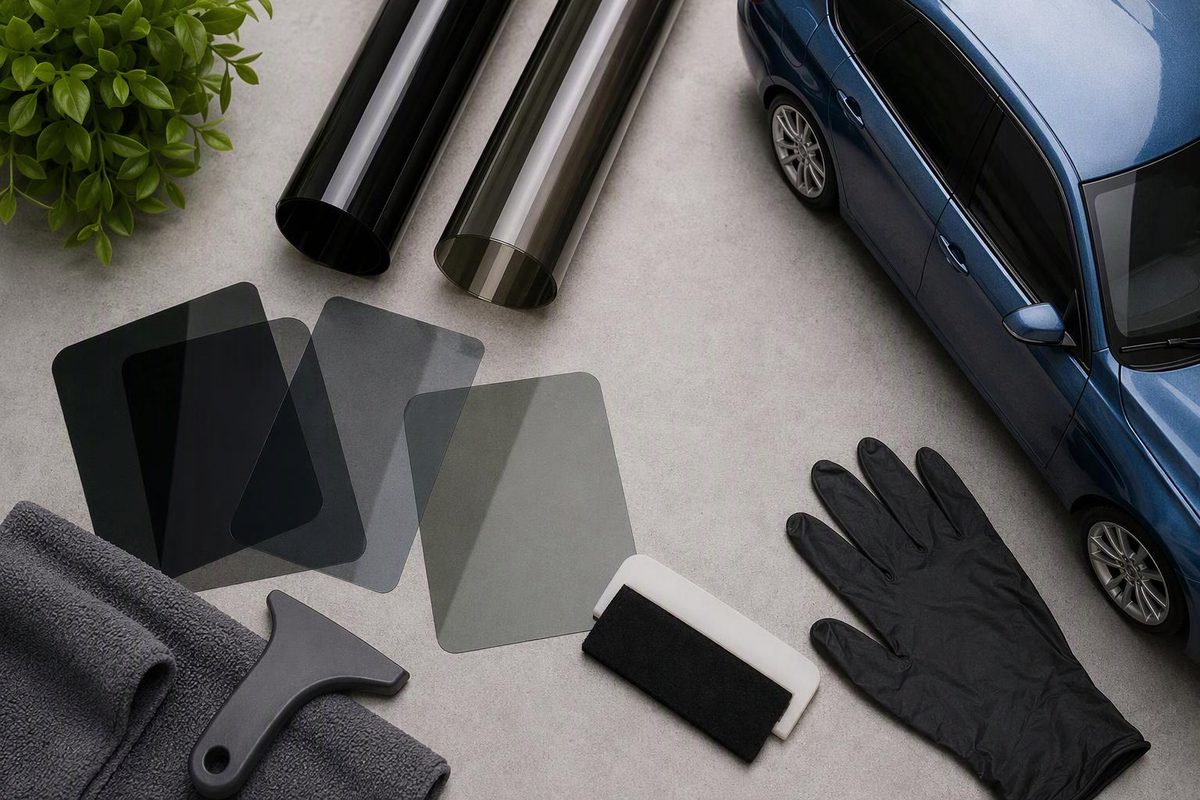
For an ordinary Missouri-registered vehicle, front side windows must transmit at least 35% of visible light, with a statutory allowance of plus or minus three percentage points. Windows behind the driver and the rear glass have no tint-darkness limit. Aftermarket windshield tint is generally prohibited except on the upper portion normally tinted by the manufacturer. These rules come from Missouri Revised Statutes § 307.173 and the Missouri State Highway Patrol’s tint guidance.
Reviewed October 3, 2026. This guide covers Missouri’s state rules for ordinary passenger cars, SUVs and pickups; verify current requirements with the Highway Patrol before installation. It is general information, not legal advice.
Missouri tint limits by window
VLT means visible light transmission: a higher percentage lets more light through. The front-side requirement applies to the glass and film together, not simply the percentage printed on a film box.
| Window | Missouri state rule |
|---|---|
| Front side windows and sidewing vents immediately beside the driver | At least 35% combined VLT, plus or minus 3 percentage points |
| Front-side reflectance | No more than 35% combined luminous reflectance, plus or minus 3 percentage points |
| Rear side windows behind the driver | No tint-darkness limit |
| Rear window | No tint-darkness limit |
| Windshield | No general full-windshield film allowance; the exception covers the upper portion normally tinted by the manufacturer |
The front-side VLT and reflectance limits are stated in § 307.173. The Highway Patrol confirms that windows behind the driver and the rear glass are not subject to tint limitations.
These ordinary state limits do not give SUVs or pickups permission to use darker front windows than sedans. Window position—not a desire to match dark rear privacy glass—is what matters.
Is 35%, 20% or 5% tint legal?
35% film is not automatically legal on the front windows. Missouri measures the combined glass-and-film result. As an illustrative estimate:
80% glass × 35% film = 28% finished VLT.
That result is below even the lower edge of Missouri’s statutory allowance. On the same hypothetical glass, 50% film would produce approximately 40% VLT. Actual glass and film transmission vary, so have the installer meter the existing glass and check the finished installation rather than relying on this calculation alone.
The law expressly includes the ±3-point allowance. For purchasing, target at least 35% finished VLT with some margin, instead of ordering a job designed around the lower edge. Our 35% tint guide explains why nominal film darkness and finished VLT differ.
For ordinary front-side applications without a medical permit, 20% and 5% film are too dark. On rear side windows and the rear glass, those darkness levels are allowed under Missouri’s state tint rule. That does not make them equally suitable for seeing through the glass at night. Compare the visibility trade-offs in our tint-level guide.
Windshield tint: do not assume a five-inch allowance
Missouri’s statute describes the permitted upper windshield area as the portion “normally tinted by the manufacturer of motor vehicle safety glass.” It does not specify a universal five-inch strip. Have the installer identify the permitted area for your windshield rather than applying a generic strip depth. The Highway Patrol gives the same manufacturer-area explanation.
A very light or nearly clear full-windshield film is not automatically allowed: the statute generally prohibits windshield sun-screening devices outside its exceptions. It separately protects factory-installed tinted glass and equivalent replacement glass. See the windshield and factory-glass provisions.
Medical permits require more than a doctor’s note
Missouri allows a permit for darker front-side tint when a serious medical condition requires it. The Highway Patrol’s September 2025 brochure directs applicants to:
- Obtain a physician’s written prescription in the vehicle owner’s name, issued within the preceding year, identifying the serious medical condition and specific tint percentage needed.
- Bring the tinted vehicle and prescription to a local Highway Patrol headquarters for the permit process.
- Keep the permit in the vehicle with a copy of the prescription. The Patrol affixes a windshield sticker and a rear-window or bumper decal.
Contact the Patrol before arranging the job so you can confirm the required documentation and visit procedure. A prescription alone is not the operating permit, and this front-side exemption should not be treated as permission to tint the entire windshield. Official permit instructions.
A passed inspection does not prove legal tint
The Highway Patrol says Missouri safety inspection stations do not inspect side or rear tint for compliance, although the windshield is inspected and aftermarket vision-reducing material can cause rejection. A used car’s inspection paperwork therefore does not establish that its front-side tint is legal. Highway Patrol inspection guidance.
Violating § 307.173 is a Class C misdemeanor. The statute also expressly exempts vehicles licensed with historical plates; that is not the same as merely owning an older car. Statutory penalty and historical-plate exemption.
Before paying for tint—or accepting an already-tinted used car—ask for measured front-window VLT, the film’s reflectance specification and confirmation that the finished window meets the reflectance limit, and confirmation of the windshield strip boundary. A receipt labeled “35% legal tint” is not a substitute for a compliant finished window.