
Legal Tint in Utah: Check the Finished Glass, Not the Film Label
Check Utah’s 35% front-side tint limit, 70% windshield rule, unrestricted rear darkness, mirror requirements and metering variance before installation.
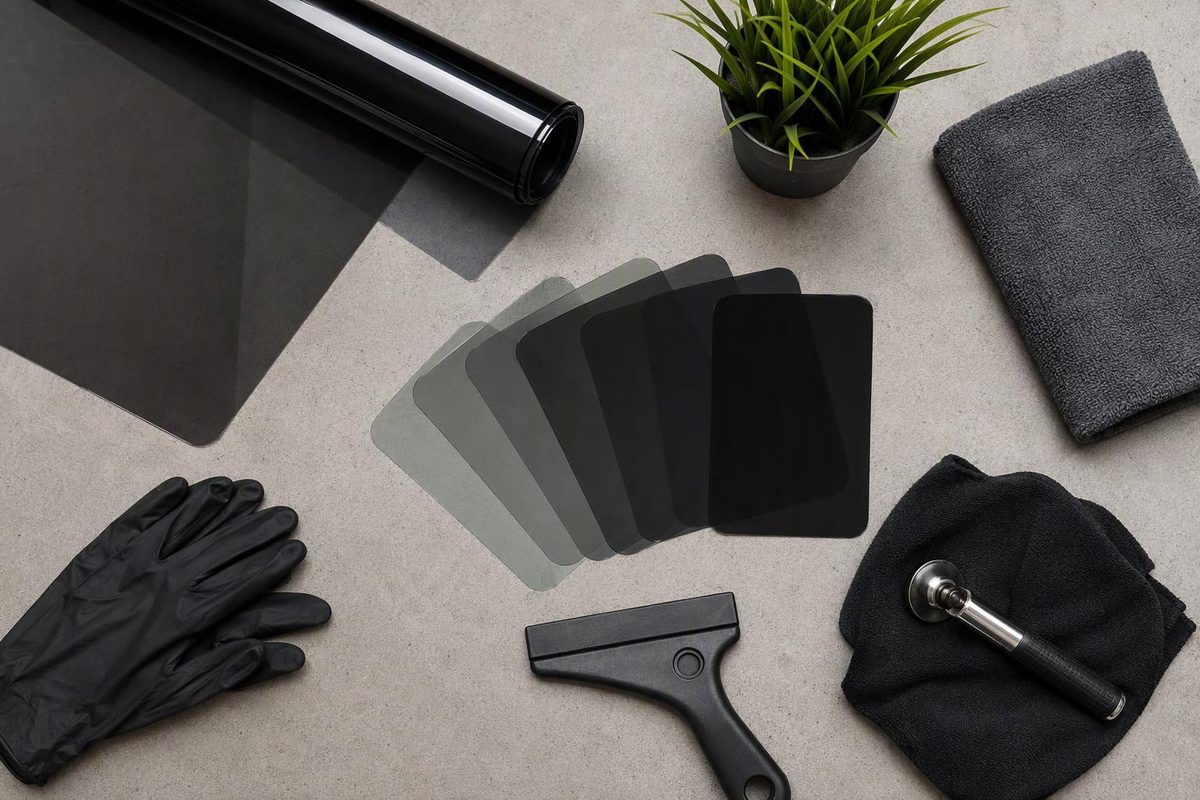
Utah requires at least 35% visible light transmission on front side windows and at least 70% on the windshield, subject to specified exceptions. Rear side windows behind the driver and the rear window have no minimum light-transmission requirement. Metallic or mirrored appearance is prohibited, and tinted vehicles generally need both left and right exterior rear-view mirrors. These rules come from Utah Code § 41-6a-1635.
Reviewed October 8, 2026, against the current statute, effective May 7, 2025. General information, not legal advice; verify current requirements with Utah Highway Patrol or the DMV before installation.
Utah tint limits by window
VLT means visible light transmission: a lower percentage means less visible light passes through. For choosing legal tint, the relevant result is the window with the film installed—not simply the percentage printed on the film package.
| Window | Utah requirement | What to ask your installer |
|---|---|---|
| Front driver and passenger side windows | At least 35% VLT, with a specified officer-metering variance | A finished-window reading of at least 35%, preferably with some margin |
| Main windshield area | At least 70% VLT | Verify the existing glass before considering even a very light film |
| Top windshield strip | Nontransparent material allowed within the statutory boundary | Measure the strip against the top edge and AS-1 line |
| Rear side windows behind the driver | Any darkness | Choose darkness for your visibility needs; check exterior mirrors |
| Rear window | Any darkness | Check exterior mirrors and rearward visibility |
The statute provides these limits and exceptions; Utah Highway Patrol’s guidance also confirms the 35% front-side requirement and unrestricted rear darkness. These are the state operating rules, not a guarantee that every installation satisfies federal requirements.
Is Utah’s front-side limit 43% or 35%?
It is 35%. S.B. 149 changed the older 43% limit to 35%, effective May 4, 2022. The official bill record documents the change, and the current statute retains 35%.
Why “35% film” may be too dark
Glass already reduces light transmission. Adding film reduces it further.
A useful planning estimate is:
Finished VLT ≈ glass VLT × film VLT, using decimals.
For example, assuming your untinted glass measures 80% VLT:
- 35% film: 0.80 × 0.35 ≈ 28% finished VLT.
- 50% film: 0.80 × 0.50 ≈ 40% finished VLT.
These are calculated illustrations, not readings for your vehicle. The formula assumes the film percentage describes the film alone; if a specification already reports performance on test glass, do not multiply it by that glass’s VLT again. Film specifications, glass and measurements can differ. Have the shop meter the bare glass, select the film for the intended finished result, and meter the window again afterward. Our 35 percent tint guide explains the distinction in more detail.
The law allows “no more than a 5% variance” observed by a peace officer metering front-side light transmission. For installation, target at least 35% finished VLT rather than relying on that variance. The statute’s stated minimum remains 35%. Source: Utah Code § 41-6a-1635(1)(b).
20% or 5% tint is too dark for the front side windows, but rear-window darkness is unrestricted under this section. Rear legality does not make the same film legal on every window.
Windshield, mirrors and appearance restrictions
For a top strip, Utah’s exact boundary is material that does not extend downward more than four inches from the top edge or beyond the AS-1 line, “whichever is lowest.” Ask the installer to identify and measure that boundary rather than relying on a generic precut strip. A separate exception permits nontransparent material in the lower-left windshield corner, no more than three inches rightward from the left edge and four inches above the bottom edge. Source: subsection (3).
The same statute also requires:
- No metallic or mirrored appearance on any windshield or window. This is an appearance restriction, not a numerical reflectance allowance.
- Both exterior rear-view mirrors when any window has tint or nontransparent material, except the specified windshield-strip and lower-left-corner materials.
- Federal compliance where applicable, including for manufacturers, dealers and repair businesses. State-permitted darkness does not override those obligations.
Source: subsections (1)(c), (5) and (8).
Before approving the tint job
Ask for the intended finished VLT by window, not just a film shade. Keep darkness separate from heat-control performance when comparing automotive films.
If you need darker front glass for a medical reason, do not assume a doctor’s note authorizes it: this statute does not provide a medical tint exemption. Confirm any claimed authorization directly with Utah authorities before installation.
For a used car with existing tint, start with meter readings. Utah classifies a violation of this section as an infraction, and the section prohibits installing or selling a noncompliant window treatment. An installer’s “legal tint” description is not a substitute for checking the actual glass. Source: Utah Code § 41-6a-1635.